 In terms of raw materials, what are the differences between Oil-immersed transformers and Dry-type transformers
Jul 25, 2026
From the perspective of raw materials, the fundamental difference between Dry-type transformers and Oil-immersed transformers lies in the different insulating media and winding encapsulation materials, which determines the composition of their entire material system.
Core insulation medium: oil or air + solid insulation
Oil-immersed transformer
Main insulation material: Mineral insulating oil (refined from petroleum fractions, such as naphthenic oil and paraffinic oil
The insulating oil performs two main functions: electrical insulation and heat dissipation.
The oil fills all gaps between windings, between windings and the core, and between windings and the tank.
Dry-type transformers
Main insulation material: Solid insulation system, no liquid insulation used
Three common technical approaches:
Epoxy resin casting type (mainstream): Windings are vacuum-cast and wrapped with epoxy resin
Nomex paper insulation type (H-class Dry-type transformers): DuPont aromatic polyamide paper + air
Glass fiber impregnation type: Glass fiber reinforced resin
Heat dissipation relies entirely on air convection (AN) or forced fan blowing (AF)
Core Material: Basically the same
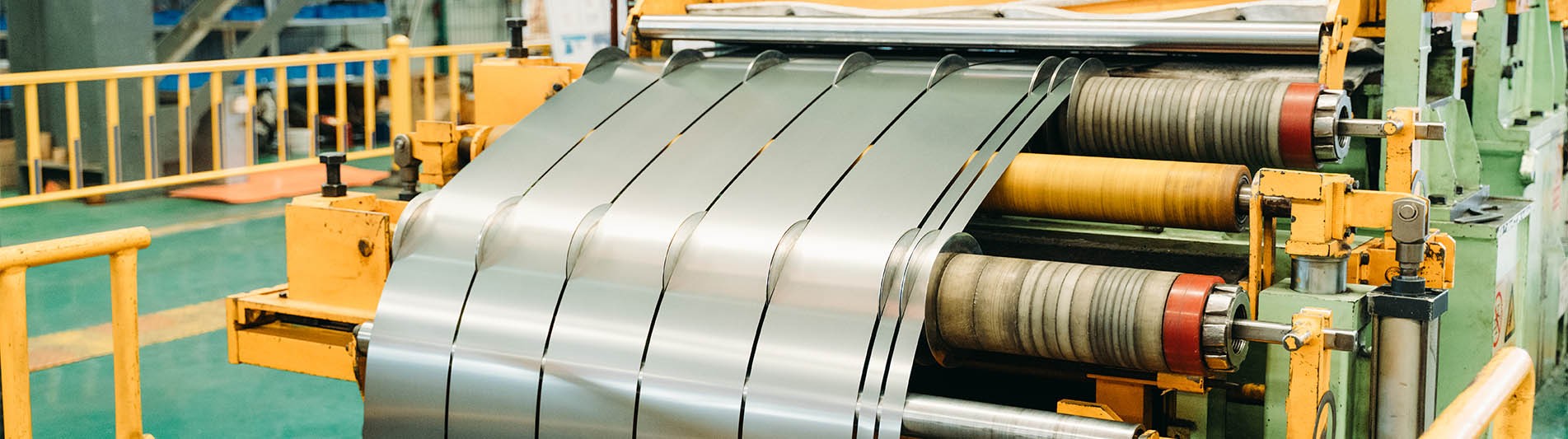
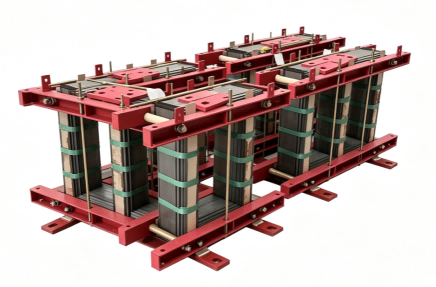
Both cores use cold-rolled grain-oriented silicon steel sheets (CRGO), processed by stacking or winding. There is no fundamental difference in this raw material. Some high-end Dry-type transformers use amorphous alloy cores to reduce no-load losses, but this is not a dividing line between product categories.
Differences in materials between fuel tank and structural components
Oil-immersed transformer
Oil tank: Welded steel plate, inner surface coated with insulating varnish
Accessories: Oil conservator, radiator/cooling pipes, gas relay, explosion-proof pipe, desiccant (silicone filter), oil filter valve
These components are themselves important raw material components.
Dry-type transformer
Enclosure: Protective enclosure made of aluminum alloy or steel plate (IP20/IP23), no oil tank
No oil conservator, no radiator, no gas relay
Only a temperature control system (PT100 sensor + temperature controller) and cooling fan (optional)
Overall material usage is significantly less than that of oil-fired transformers
Oil-fired transformers rely on "oil" for insulation and heat dissipation, so the windings can be bare and the oil tank must be thick and heavy; dry-fired transformers rely on "epoxy resin sealing" for insulation and "air" for heat dissipation, so the overall materials are lighter and cleaner, but the cost of epoxy materials themselves is not low.
LIRE LA SUITE




 IPv6 RÉSEAU PRIS EN CHARGE
 en
en fr
fr es
es