 What are the significant advantages of Dry-type transformers compared to Oil-immersed transformers
Jul 13, 2026
Compared to oil-immersed transformers, Dry-type transformers have significant advantages in four core dimensions: fire safety, flexible installation, environmental friendliness and maintenance-free operation, and suitability for special environments.
1. Intrinsically Safe: Oil-free, Non-flammable, and Non-explosive
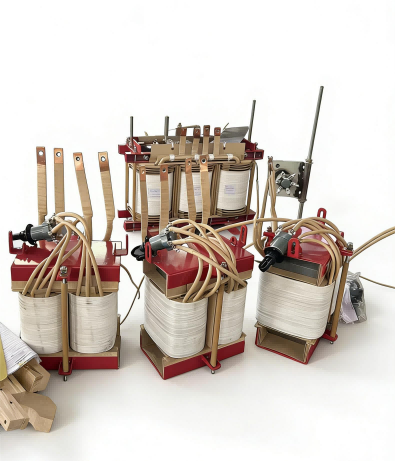
No flammable liquids: Dry-type transformer windings are directly insulated with epoxy resin or NOMEX paper, eliminating the risk of leakage, combustion, or explosion.
Zero Firefighting Burden: No need for emergency oil tanks, sump pits, sprinkler systems, or firewalls; can be directly installed in buildings, basements, shopping malls, hospitals, data centers, subway stations, and other densely populated areas.
In the event of a fire in an oil-immersed transformer, the oil will spread, burn, and release toxic fumes; Dry-type transformers completely avoid this.
2. Extremely Flexible Installation Location
Can be installed close to the load center: Dry-dry transformers can be placed in the middle of a floor, inside a shaft, or in a corner of the machine room, without requiring a separate transformer room (provided ventilation is sufficient).
Unrestricted by height/number of floors: Oil-cooled transformers are generally only installed on the ground floor or one basement level (considering oil tank and transportation), while dry-dry transformers can be installed on the roof or equipment floor of high-rise buildings.
Small footprint: Without oil tankers, radiators, oil conservators, gas relays, and other accessories, the structure is compact.
3. Simple Operation and Maintenance, No Leakage Risk
Oil-Free Handling: No need for regular oil sample filtering, oil breakdown voltage testing, oil level replenishment, or leak repair.
No Seal Aging Issues: Oil-lubricated transformers are most susceptible to leaks due to aging gaskets; Dry-type transformers completely eliminate this problem.
Routine Inspections Only Require Checking the Temperature Controller and Fan; Almost No Consumables Required.
4. Environmental Protection and Cleanliness
No Oil Pollution: Even after dismantling, there is no waste oil disposal issue, and copper and silicon steel sheets are recycled more cleanly.
No Odor or Oil Vapor Emissions: Suitable for air-sensitive environments such as food factories, pharmaceutical workshops, and precision electronics cleanrooms.
5. Strong Short-Circuit Resistance (Under Certain Structures)
The windings of resin-cast Dry-type transformers are integrally cured, resulting in extremely high mechanical strength. Their ability to withstand short-circuit electrodynamic forces is superior to that of hydraulic transformers of the same capacity (hydraulic transformer windings are loose and secured by pressure pins).
In industrial and mining power distribution systems subjected to frequent short-circuit impacts, Dry-type transformers often have a lower failure rate.
6. Controllable Partial Discharge Level
The vacuum casting process can control partial discharge to a very low level (≤5 pC), and its tolerance to high-frequency harmonics and operating overvoltages is better than that of oil-cooled transformers (partial discharge in oil-cooled transformers tends to increase with the deterioration of oil quality).
LIRE LA SUITE




 IPv6 RÉSEAU PRIS EN CHARGE
 en
en fr
fr es
es