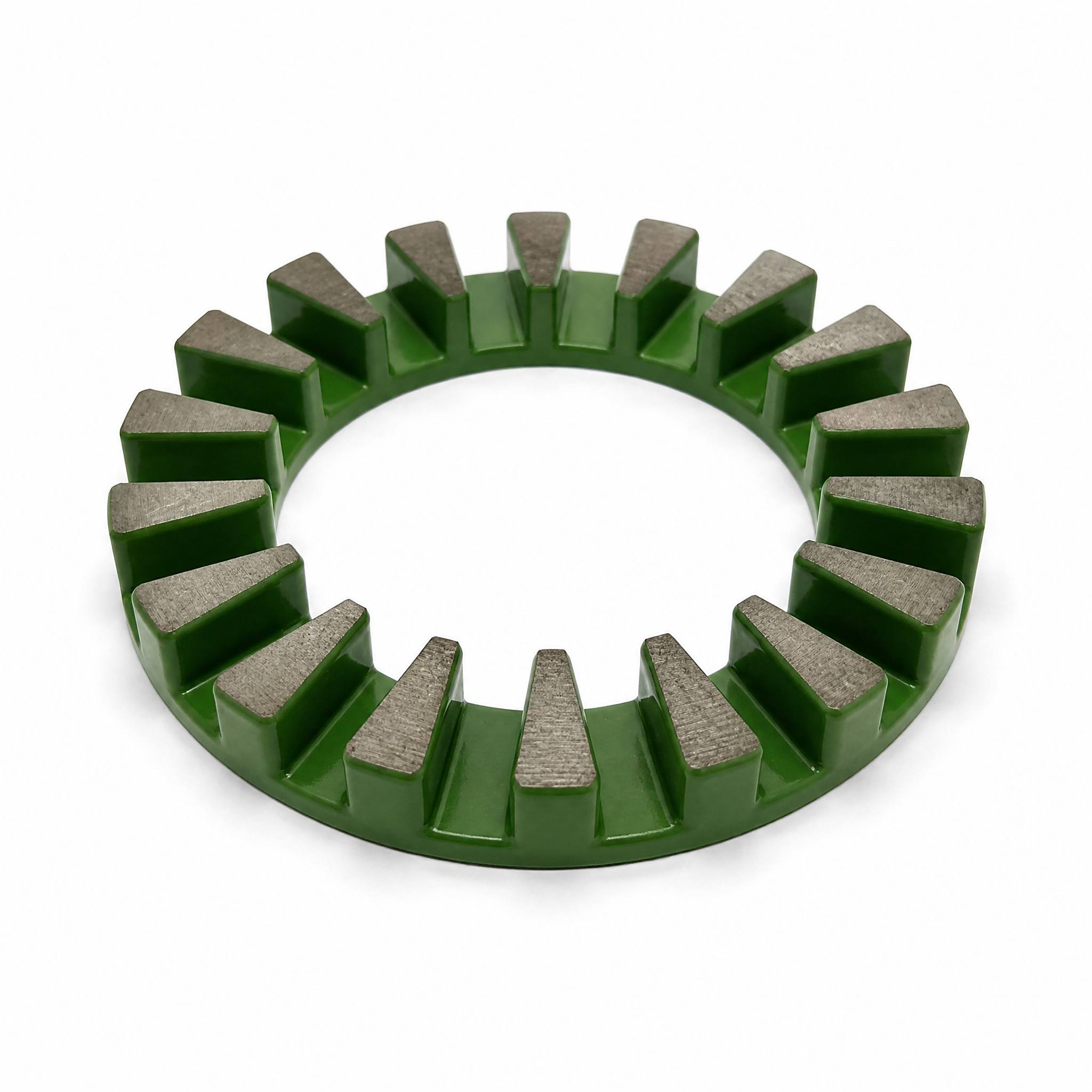
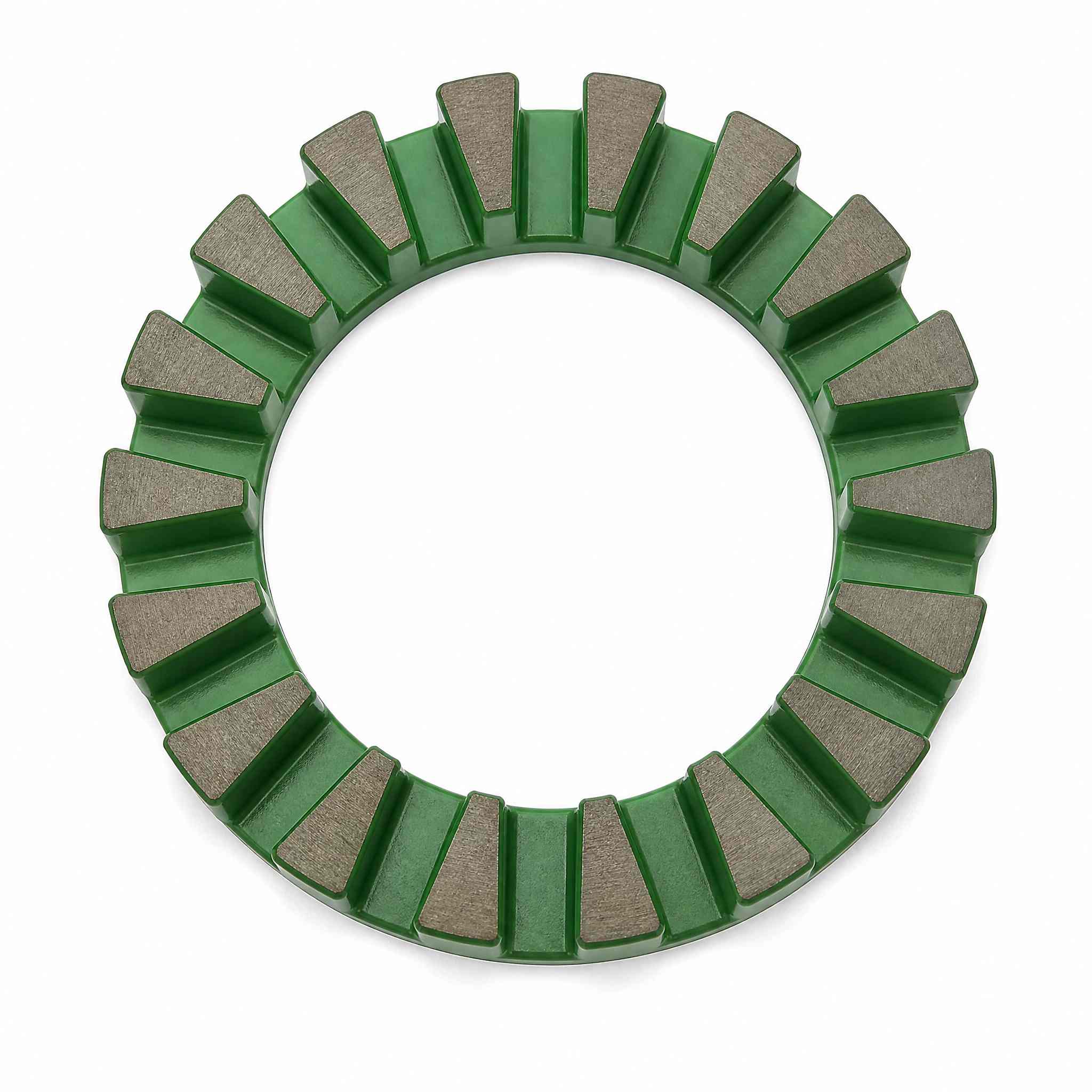
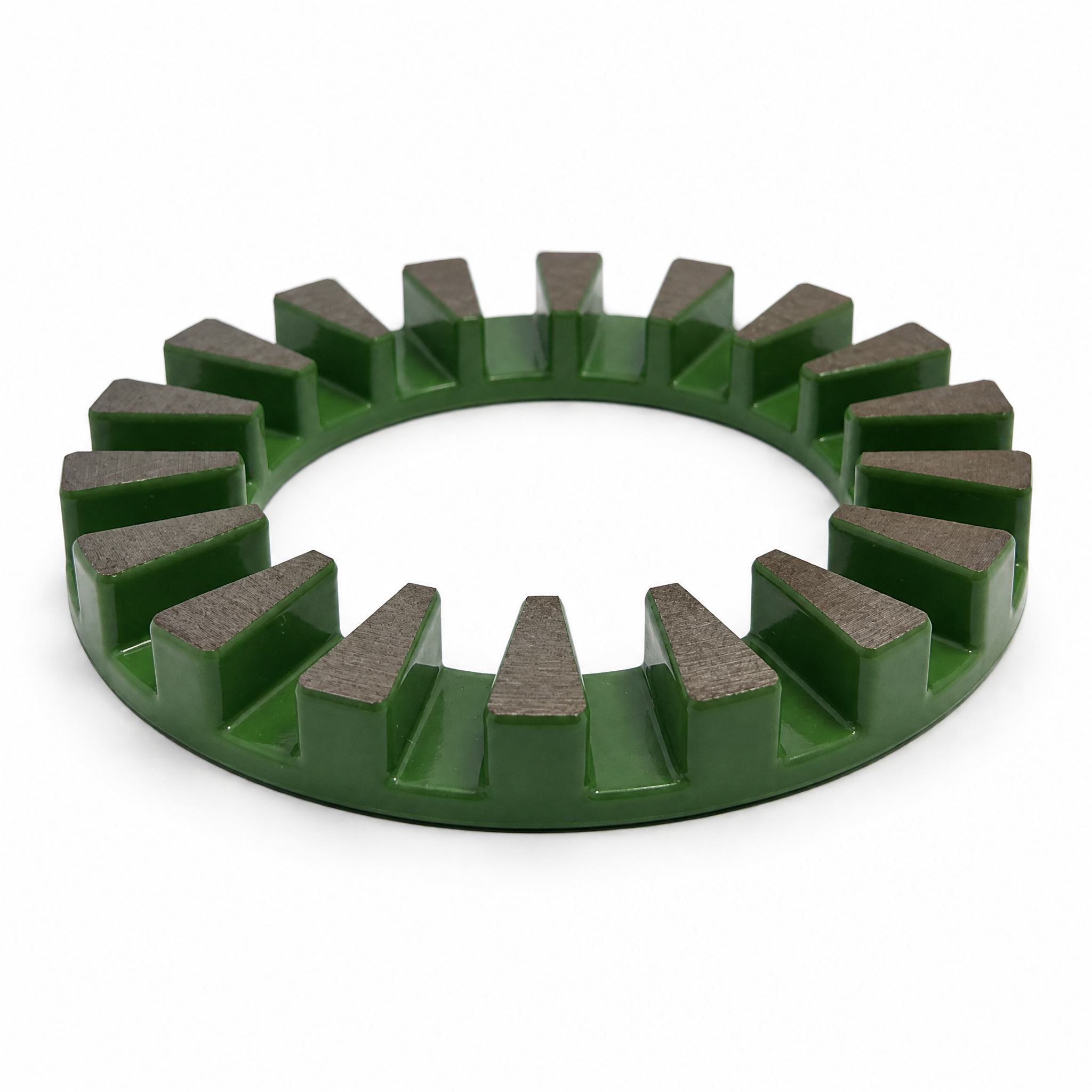
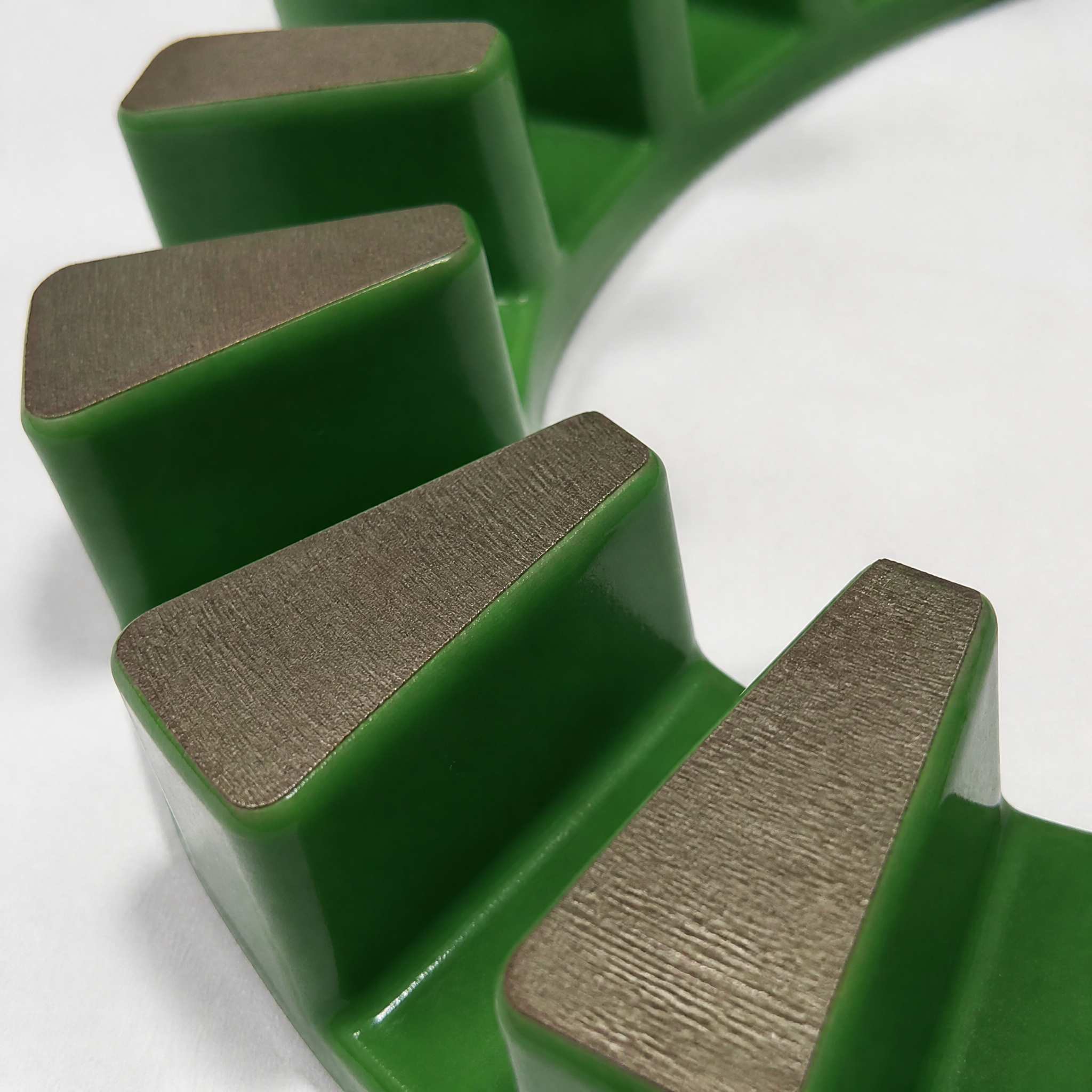
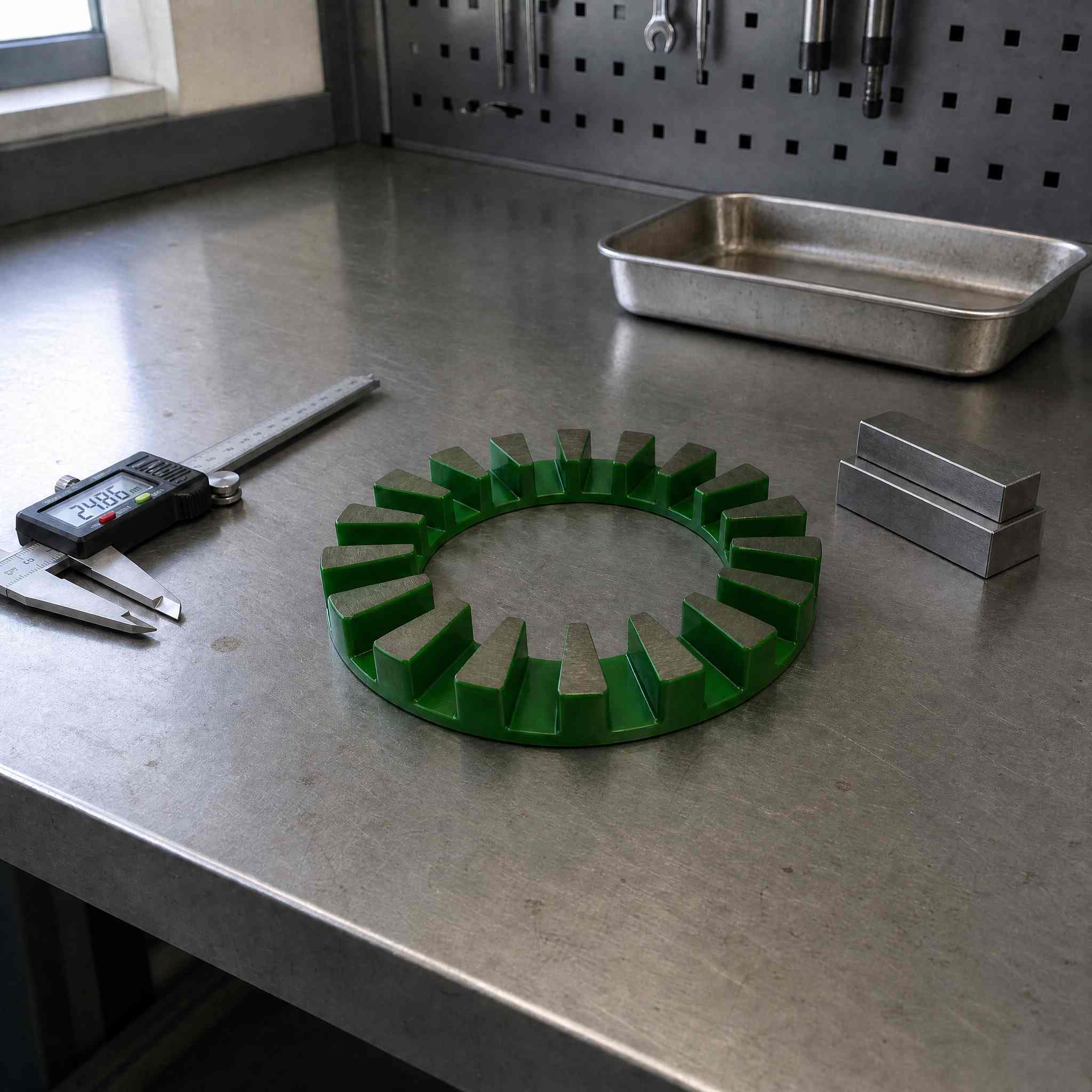
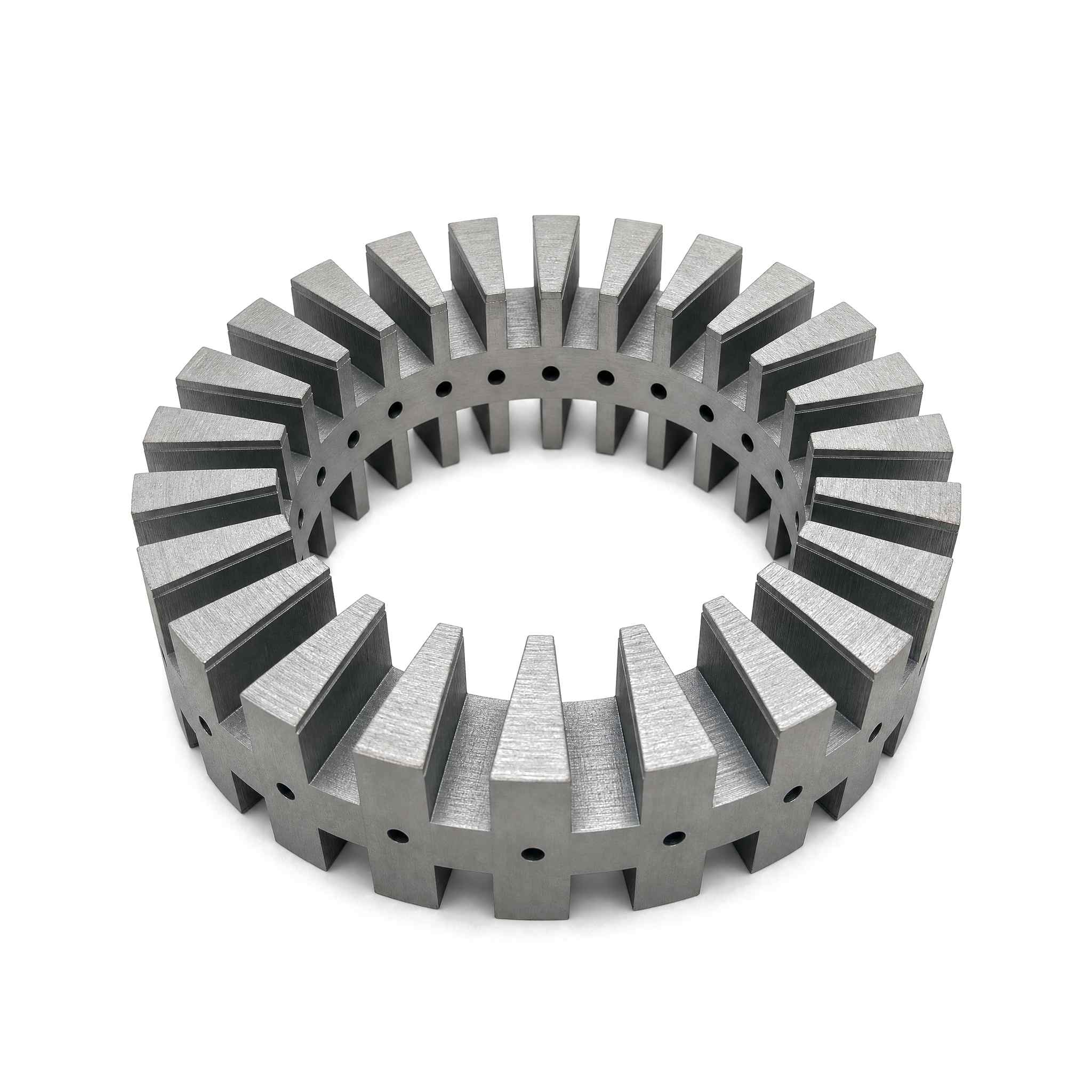
Custom axial flux stator cores wound from 0.1–0.5 mm electrical steel, with slot features formed by laser — no stamping die required. Send your drawing for a quote.
Shunge Steel manufactures custom axial flux stator cores in Foshan, Guangdong, China. We produce wound stator cores for axial flux motors — the disc-shaped, axial-field machines used in electric vehicles, eVTOL aircraft, drones, robotics and industrial equipment.
Every core is built to our customer's drawing. You send us the required inner and outer diameter, core height, slot geometry, material grade and thickness; our engineering team reviews the design and produces the core from prototype to volume.
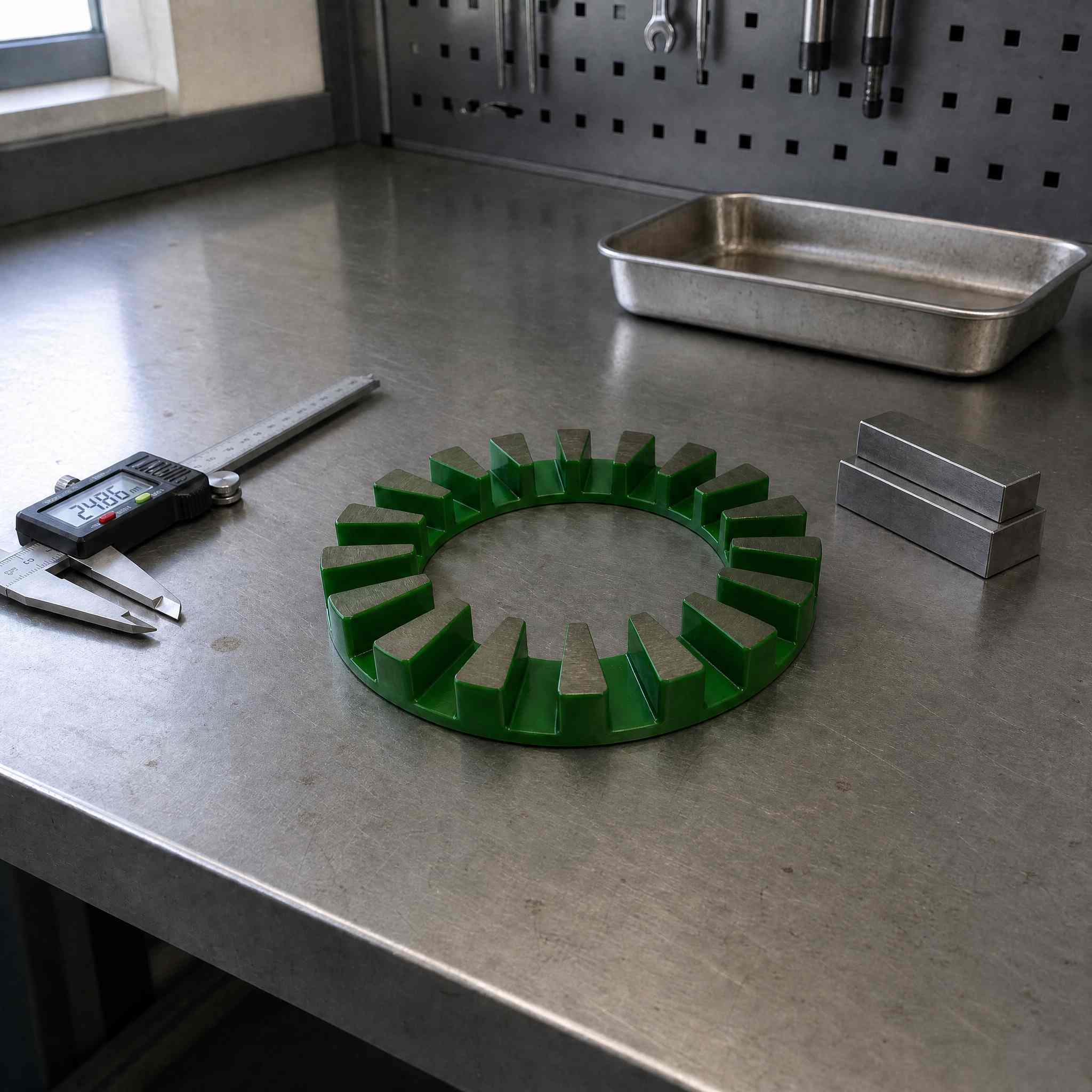
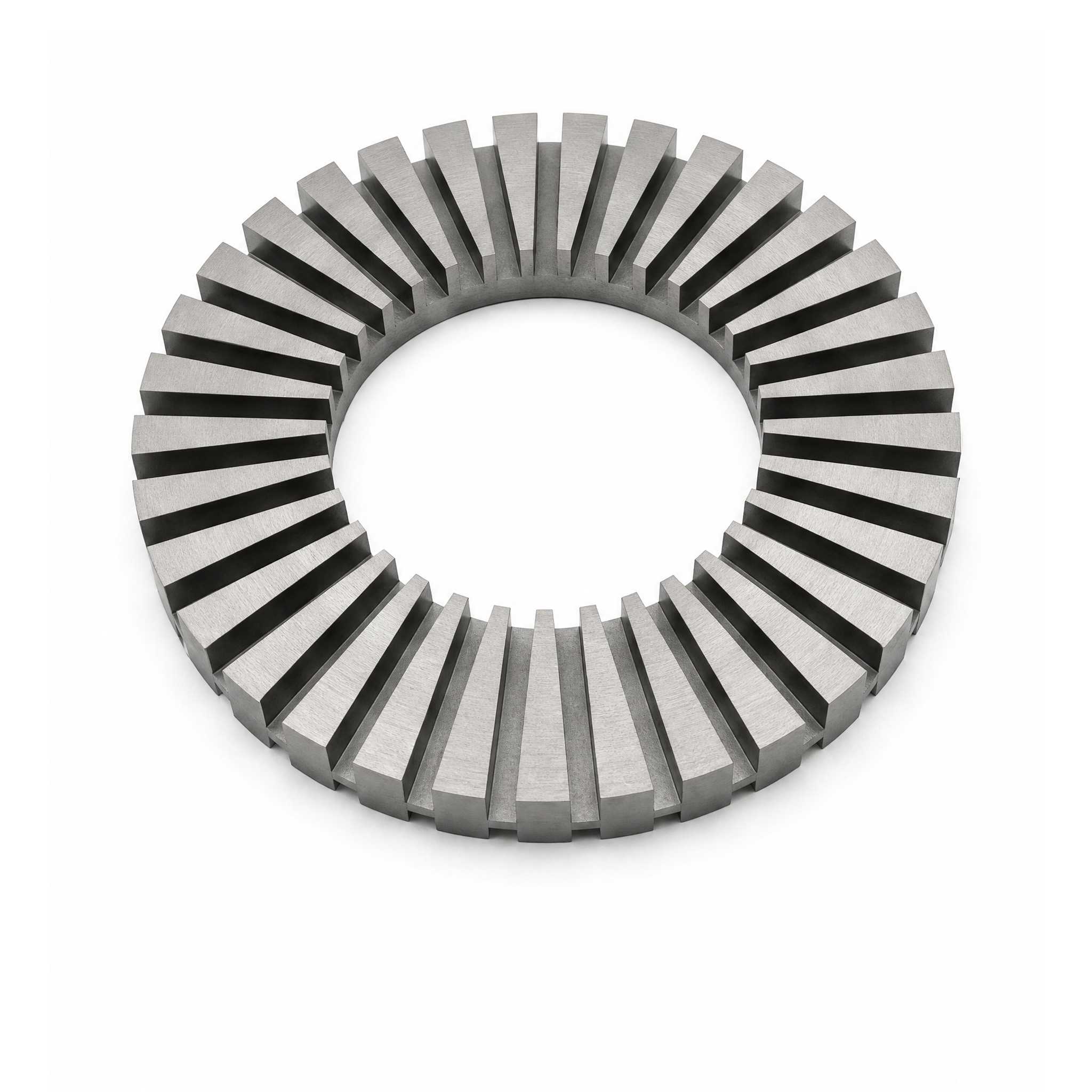
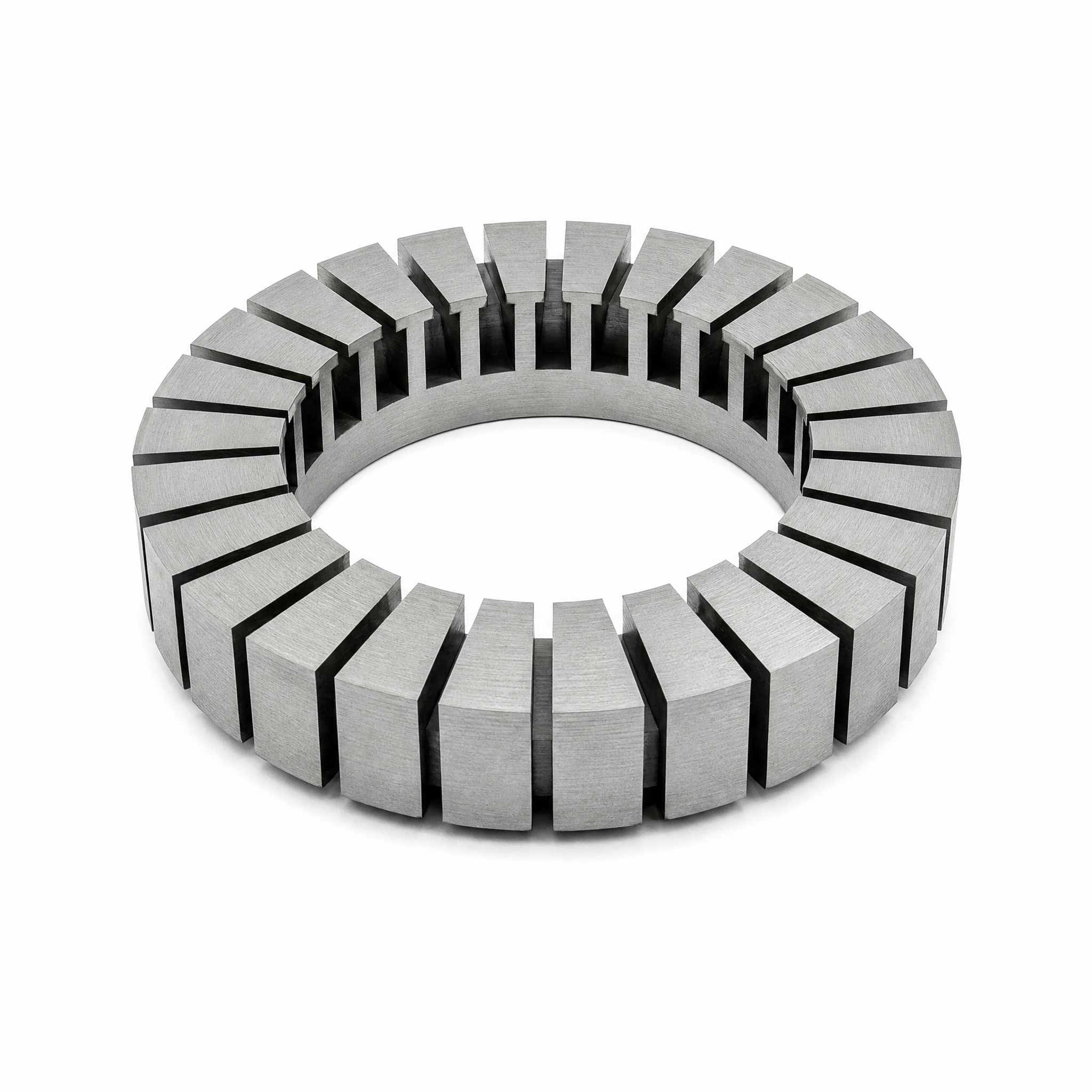
An axial flux stator core is not made the way a conventional cylindrical motor core is made. A radial flux stator is built as a stack of separate punched laminations. An axial flux stator core, by contrast, is a wound core: electrical steel strip is wound into the required disc geometry, and the slot features are then formed by laser.
This difference has practical consequences for the customer. Because there is no stamping die involved in the slot profile, a design change does not mean a new die, and small quantities and prototypes become economical. What controls the finished core instead is the winding and the laser process — layer alignment, inner and outer diameter, core height, slot position and the quality of the cut edge.
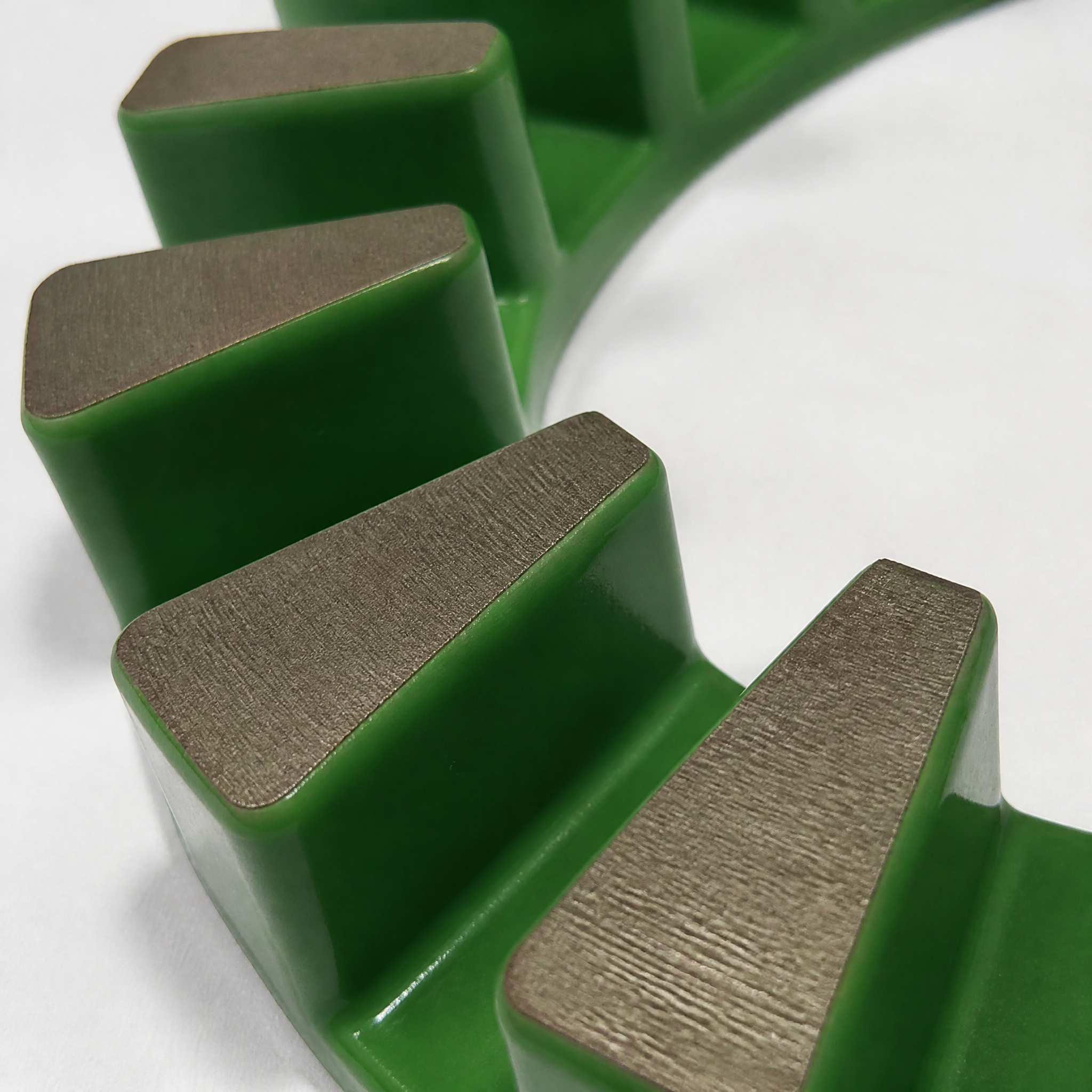
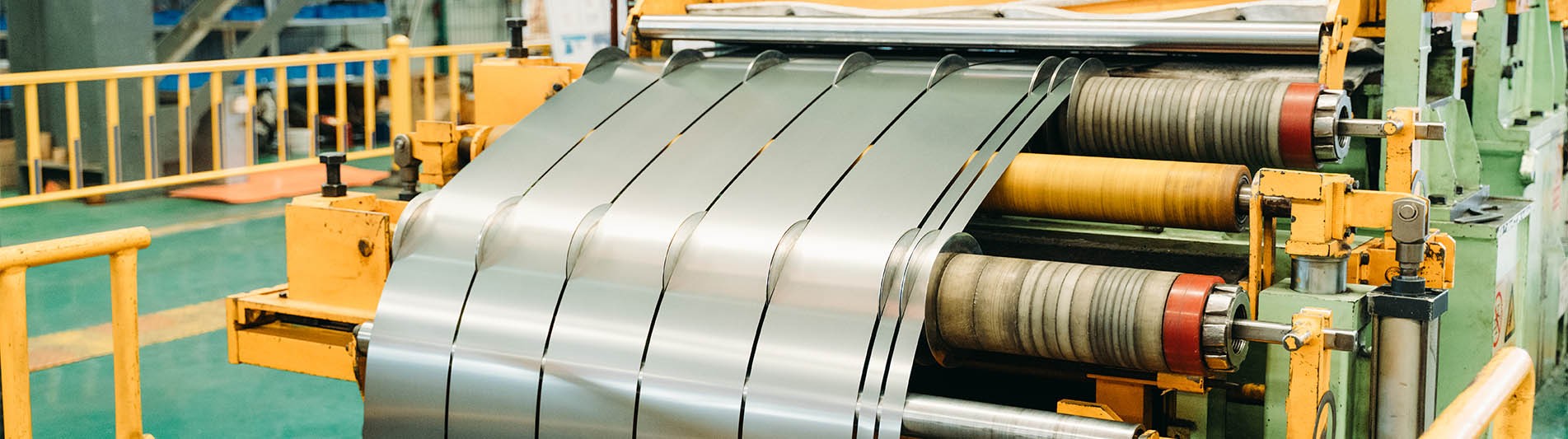
Electrical steel strip is wound into the stator core geometry. Winding tension, layer alignment and the number of layers determine the finished inner diameter, outer diameter and core height.
Because the core is formed from a continuous strip rather than from separate punched pieces, the build dimensions are controlled by the winding setup rather than by a die. A different diameter or core height is a setup change, not a tooling investment.
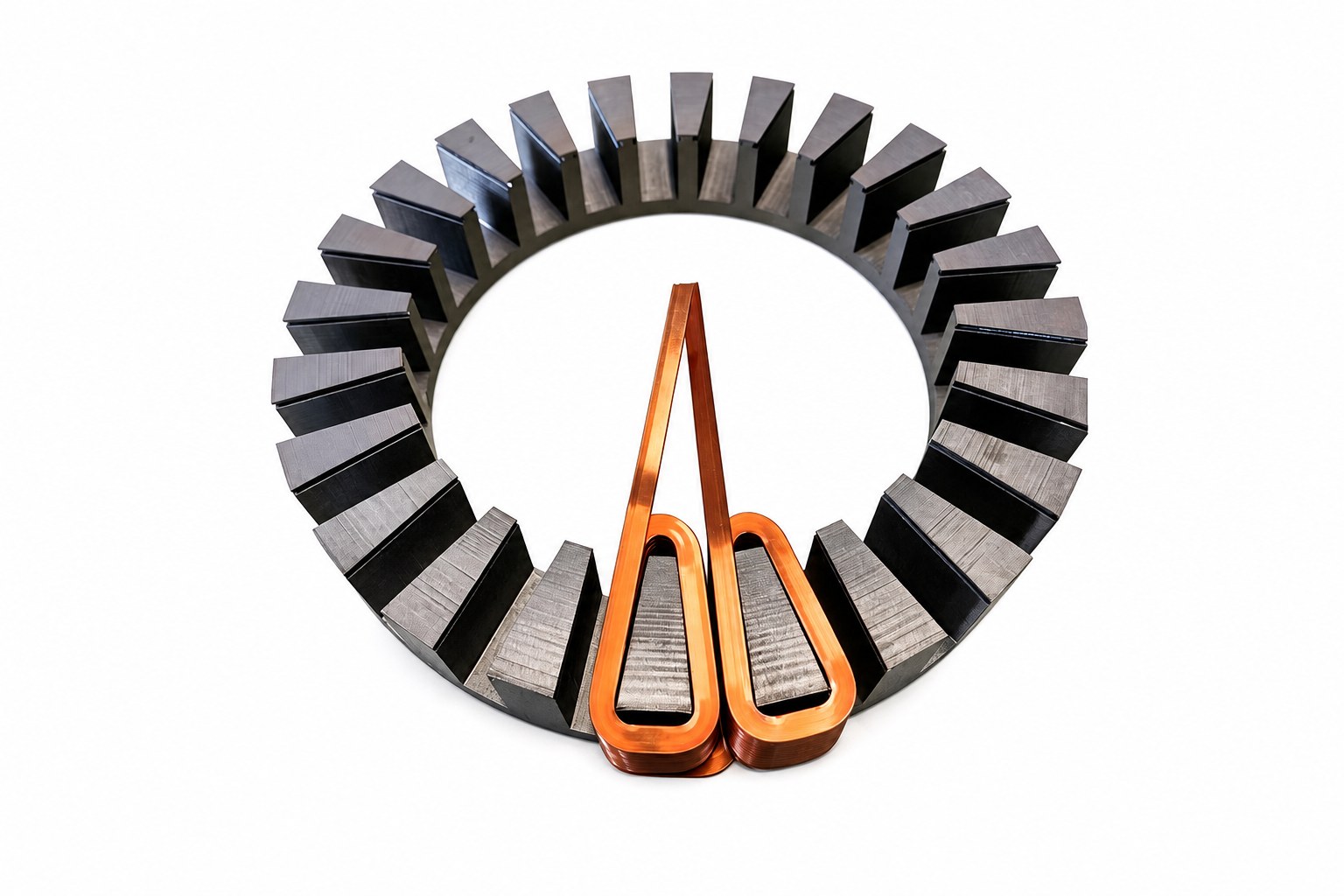
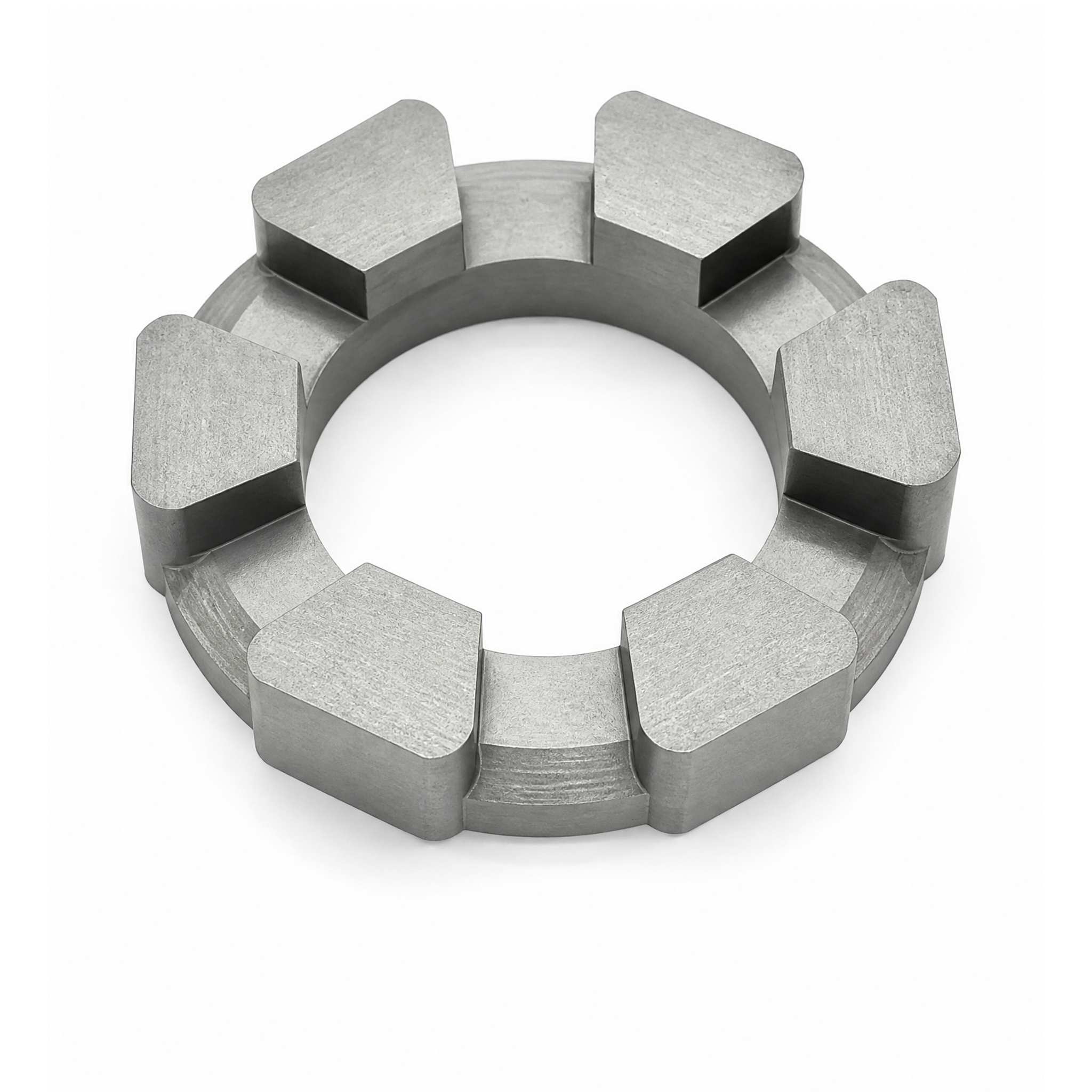
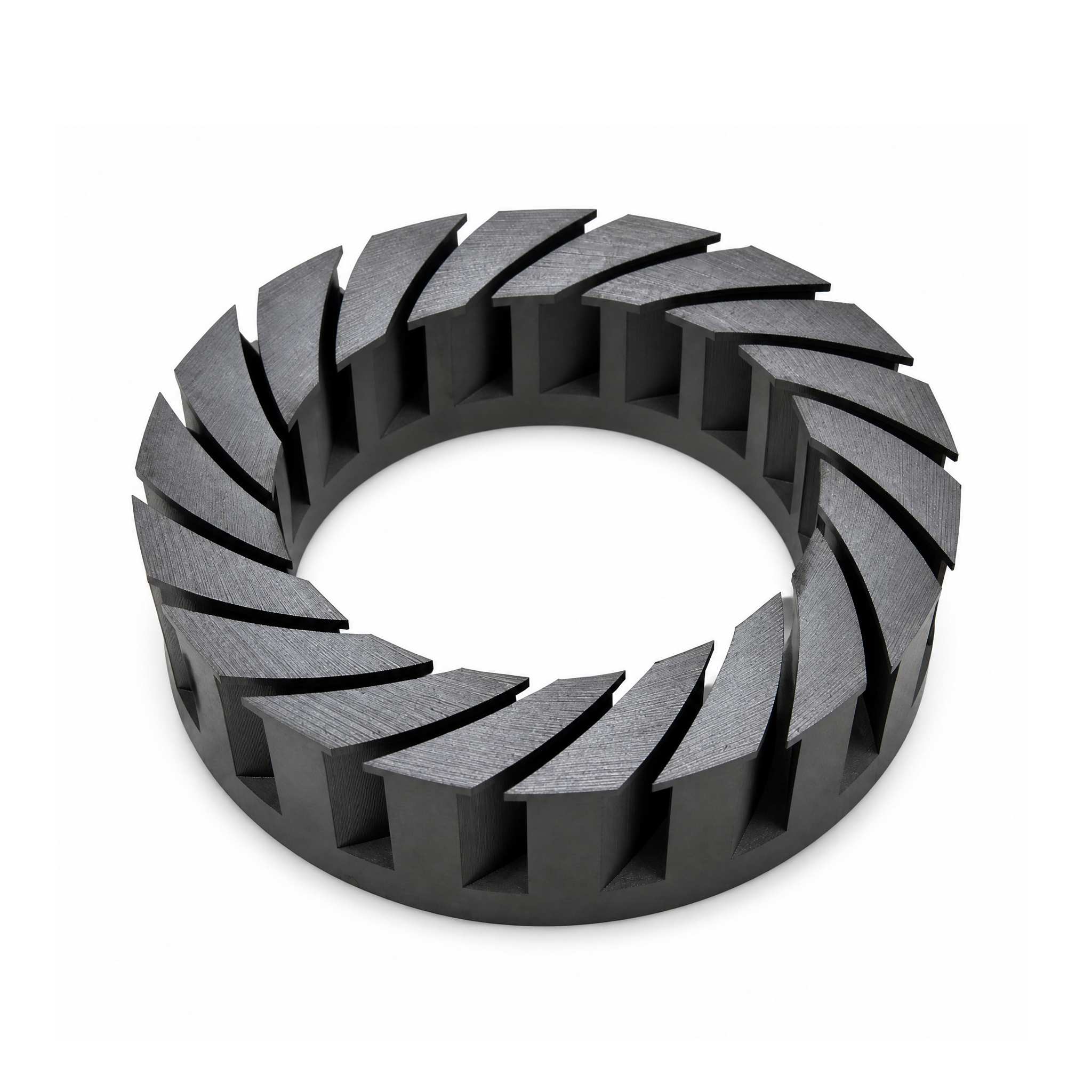
Slot geometry, mounting holes and other openings are formed by laser. For axial flux designs this matters more than it does for a radial stator: axial flux slot shapes are frequently not the simple rectangular slots of a cylindrical core, and laser processing allows slot profiles, skewed slots and non-standard openings to be produced without a die.
The quality of the cut edge is a process parameter, not something that can be sorted out afterwards. Cutting parameters determine how clean the slot face is, and a poor cut can affect the layer-to-layer insulation of the wound core, which in turn shows up as additional loss in the finished stator.
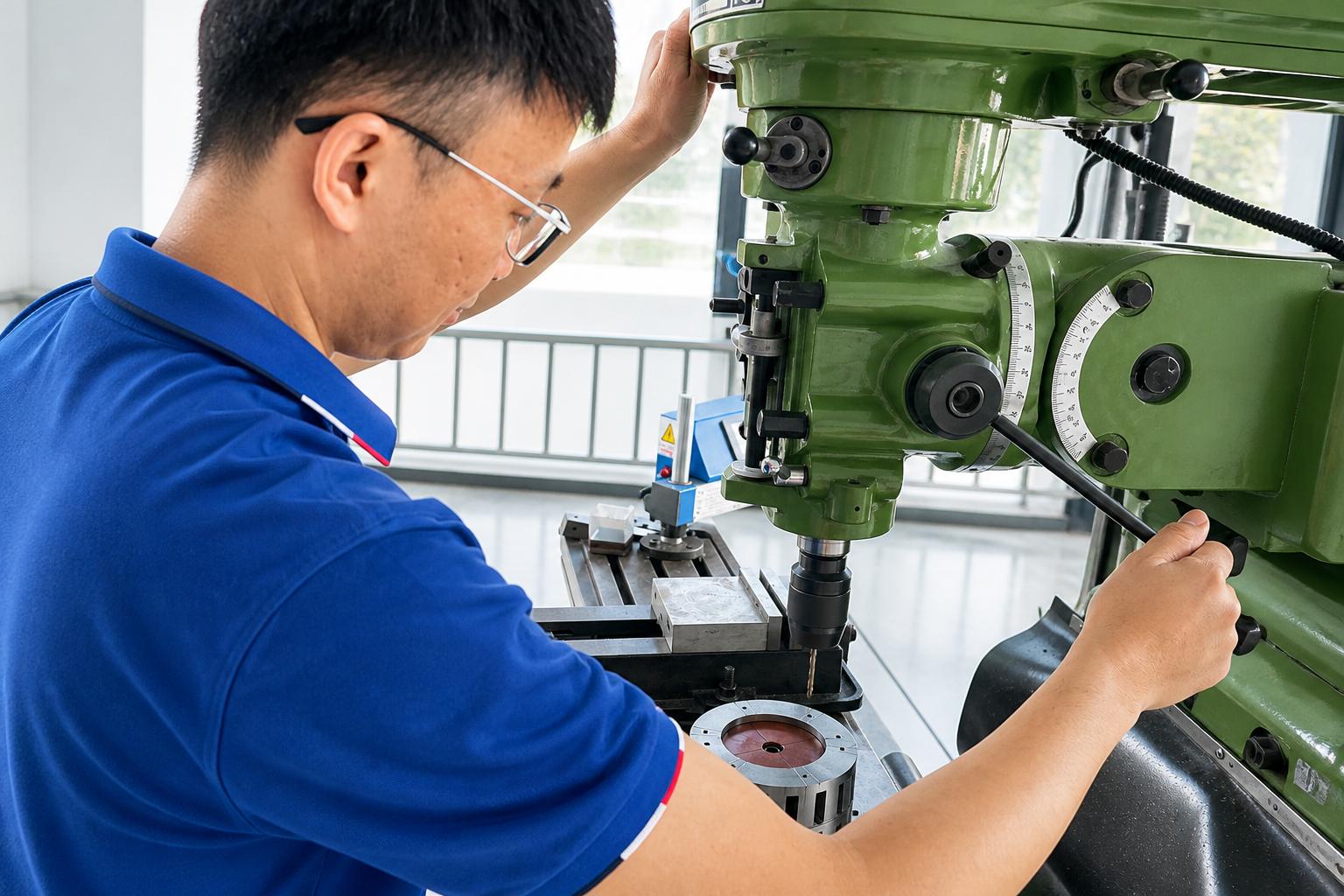
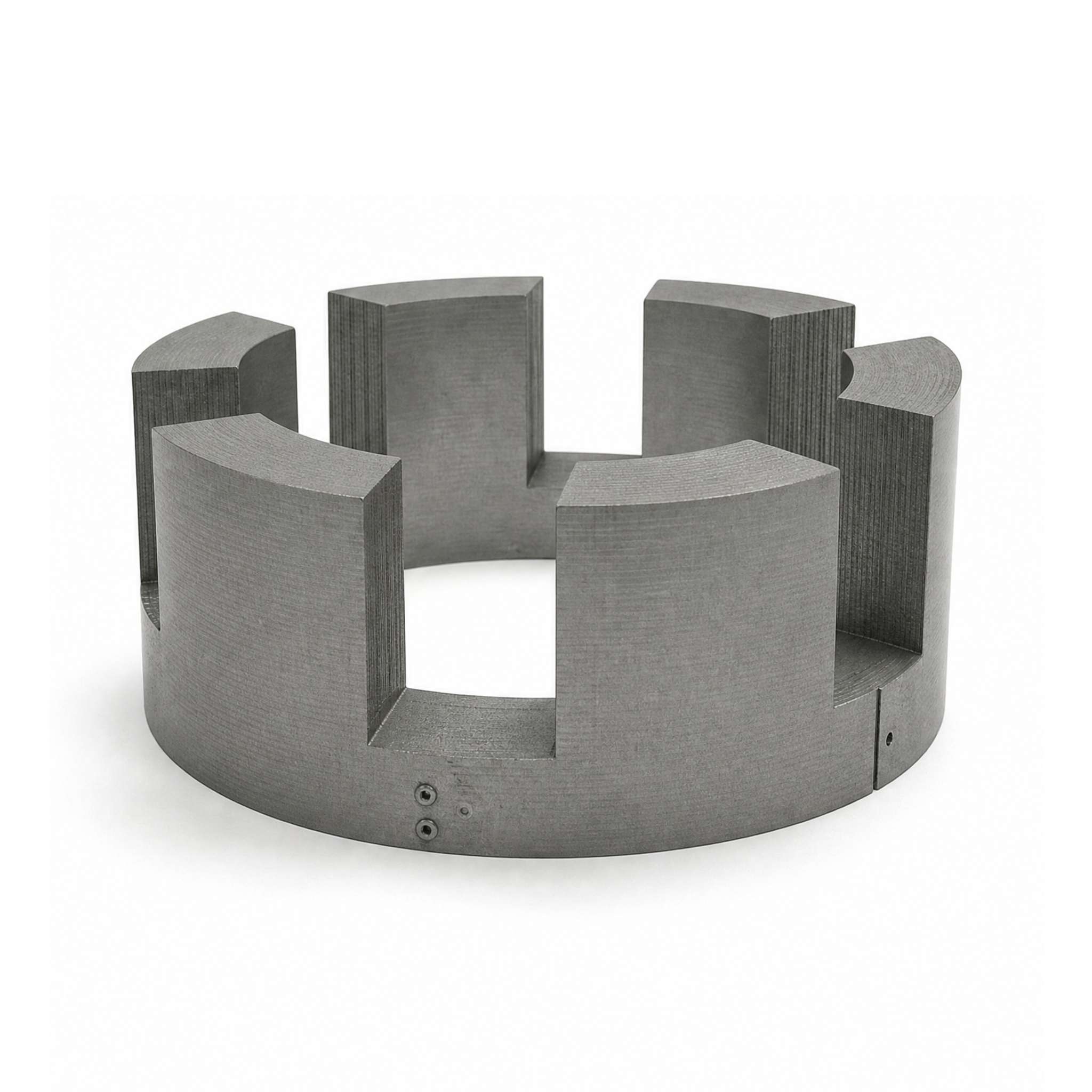
Winding introduces one geometric risk that a stamped stack does not have. Where the strip carries slot openings, the wound core's outer contour can follow the slot pattern and become polygonal instead of circular, and the core can also lose flatness as the layers build up.
Outer diameter roundness, flatness and core height are therefore checked on the wound core, and corrected where the design allows.
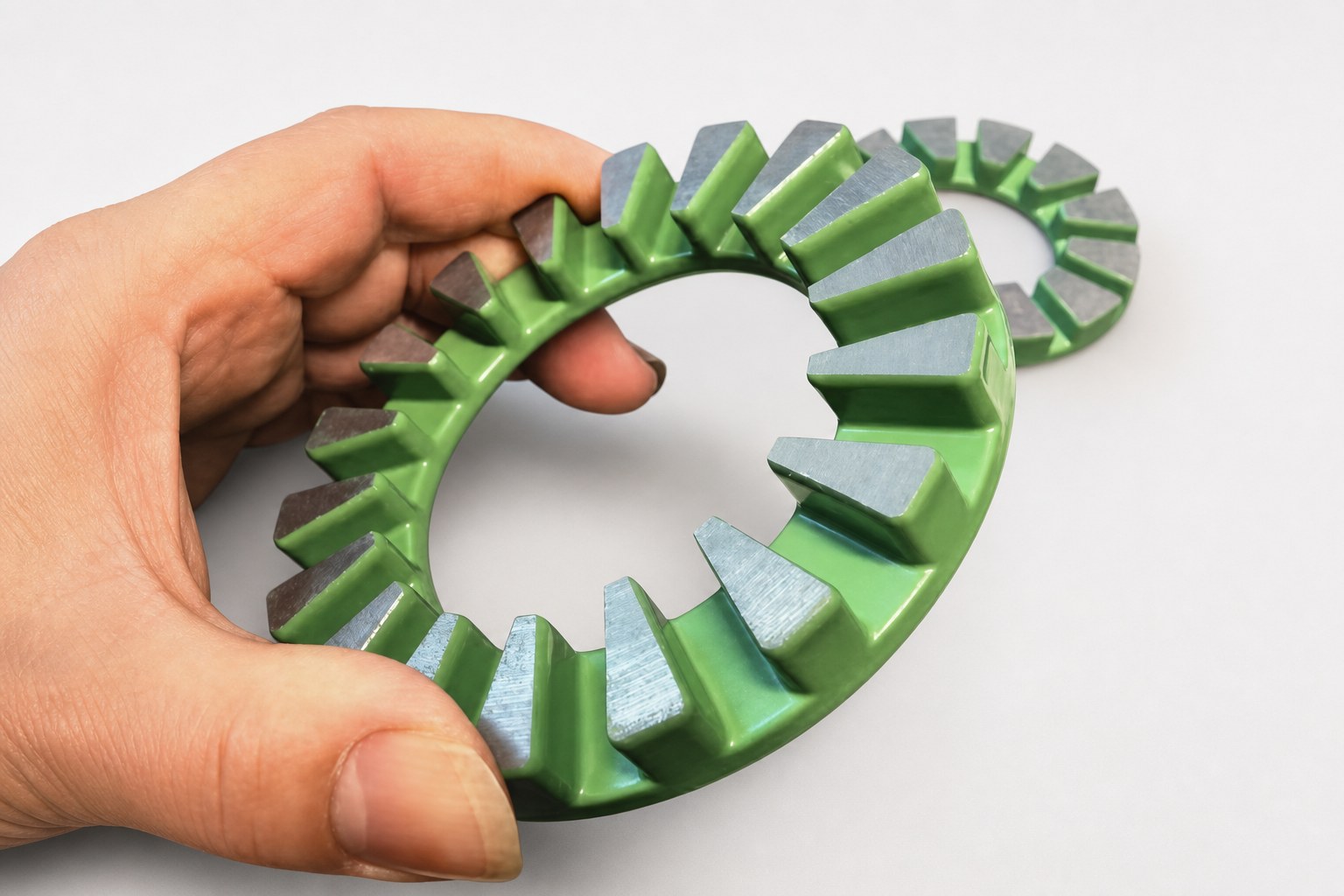
Inspection is carried out during production, against the drawing and the specification agreed to at order stage.
Because axial flux motors vary widely in topology, we build stator cores to the customer's design rather than to a fixed catalogue.
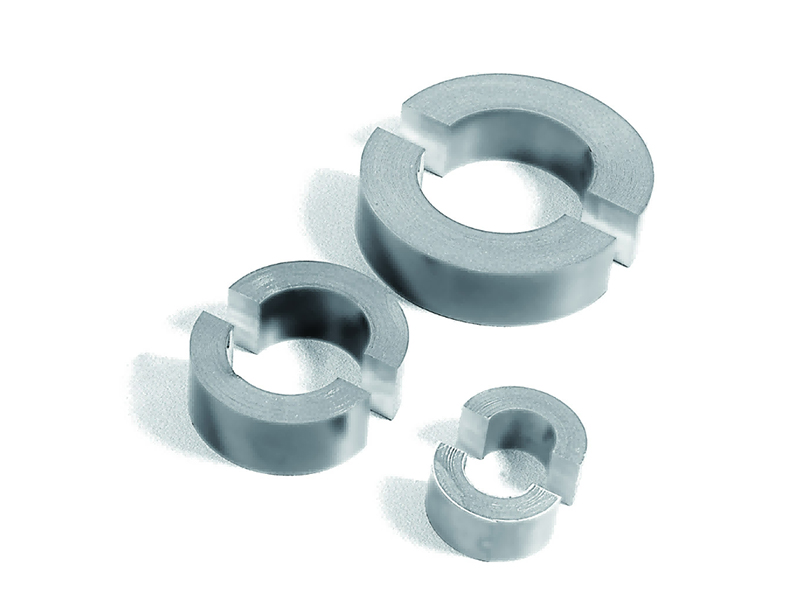
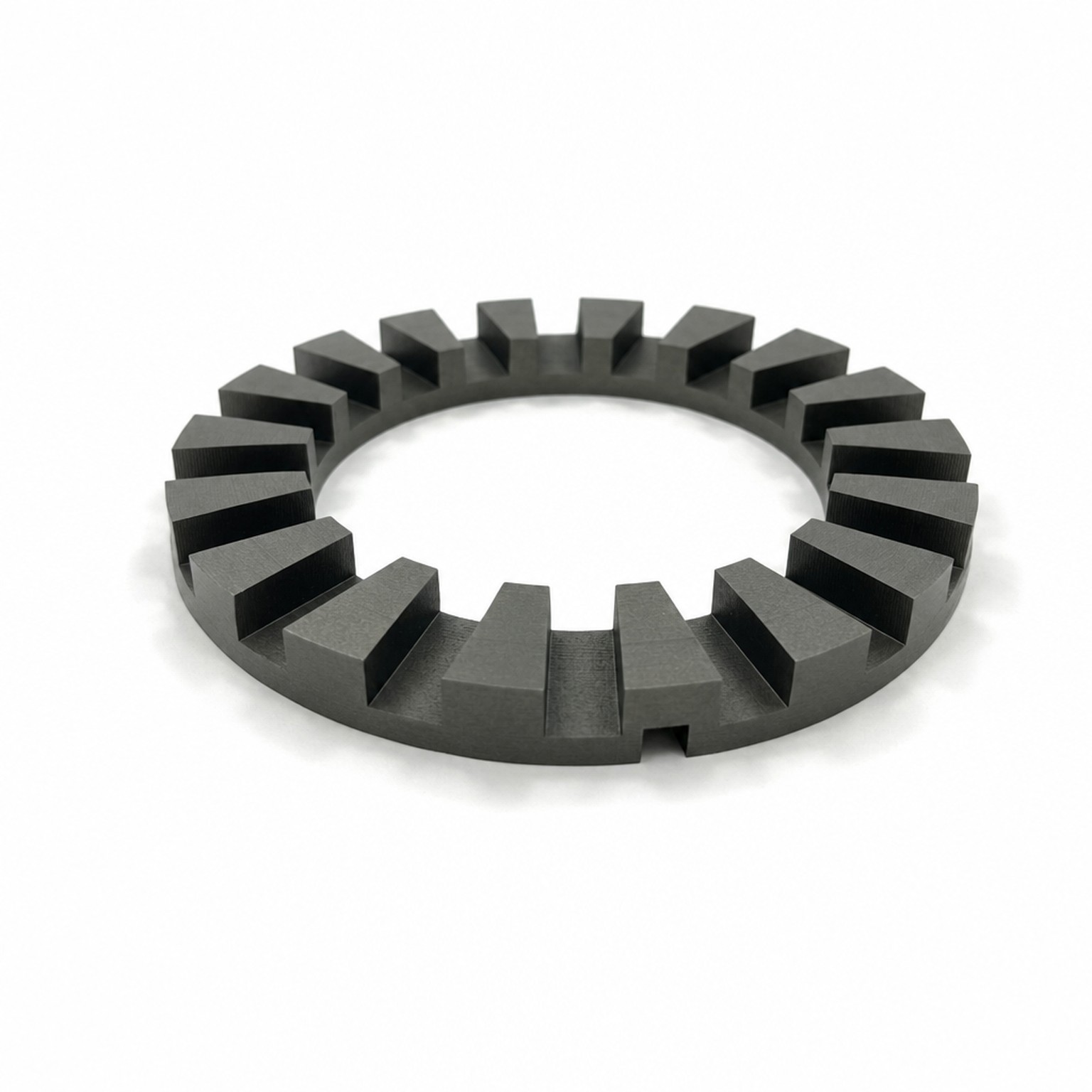
Wound ring stator core — the standard form. Electrical steel strip is wound into a ring and the slots are formed by laser. Suited to designs where the stator is a single disc facing one or two rotors.
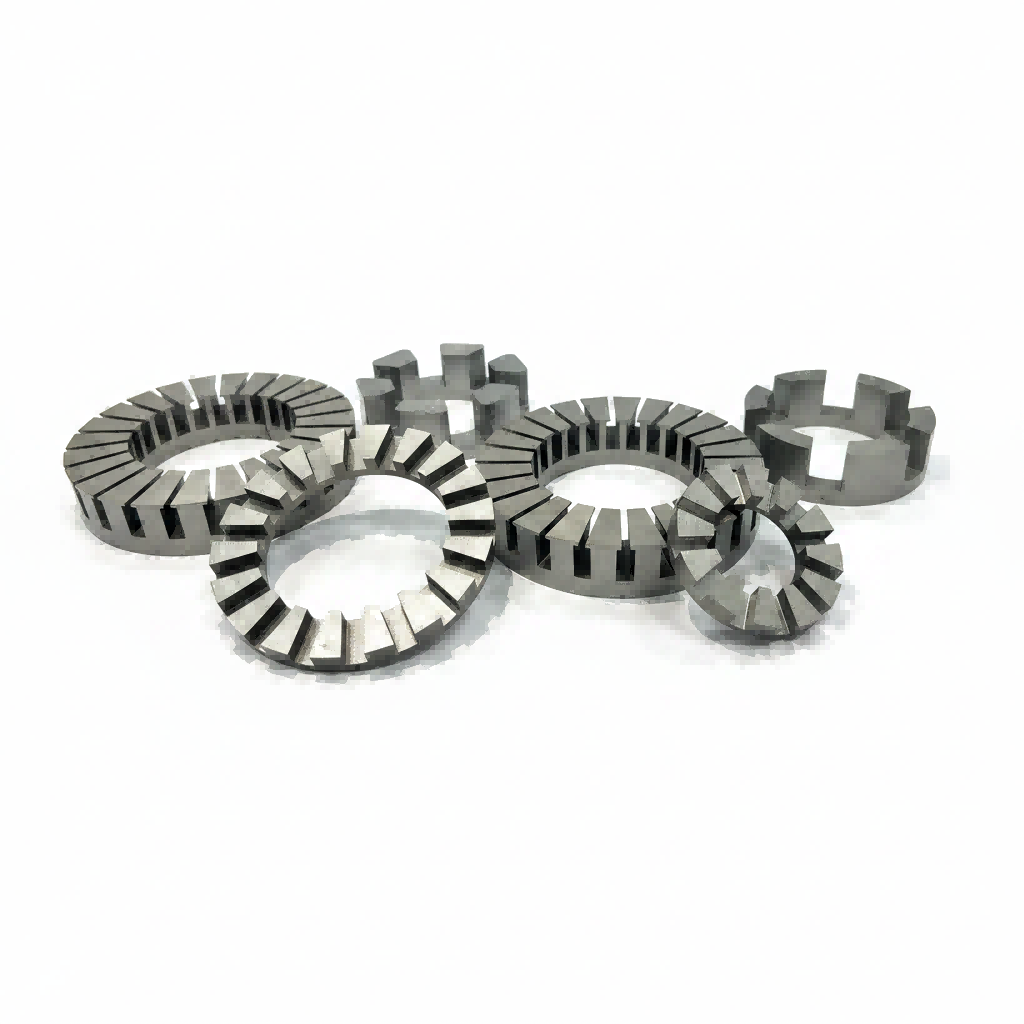
Slotted and skewed variants — slot number, slot profile and slot skew are set by the laser program rather than by a die, so non-standard slot shapes and skewed slots are practical.
Common slot counts and configurations are listed below; feasibility for a specific design is confirmed at the drawing review stage.
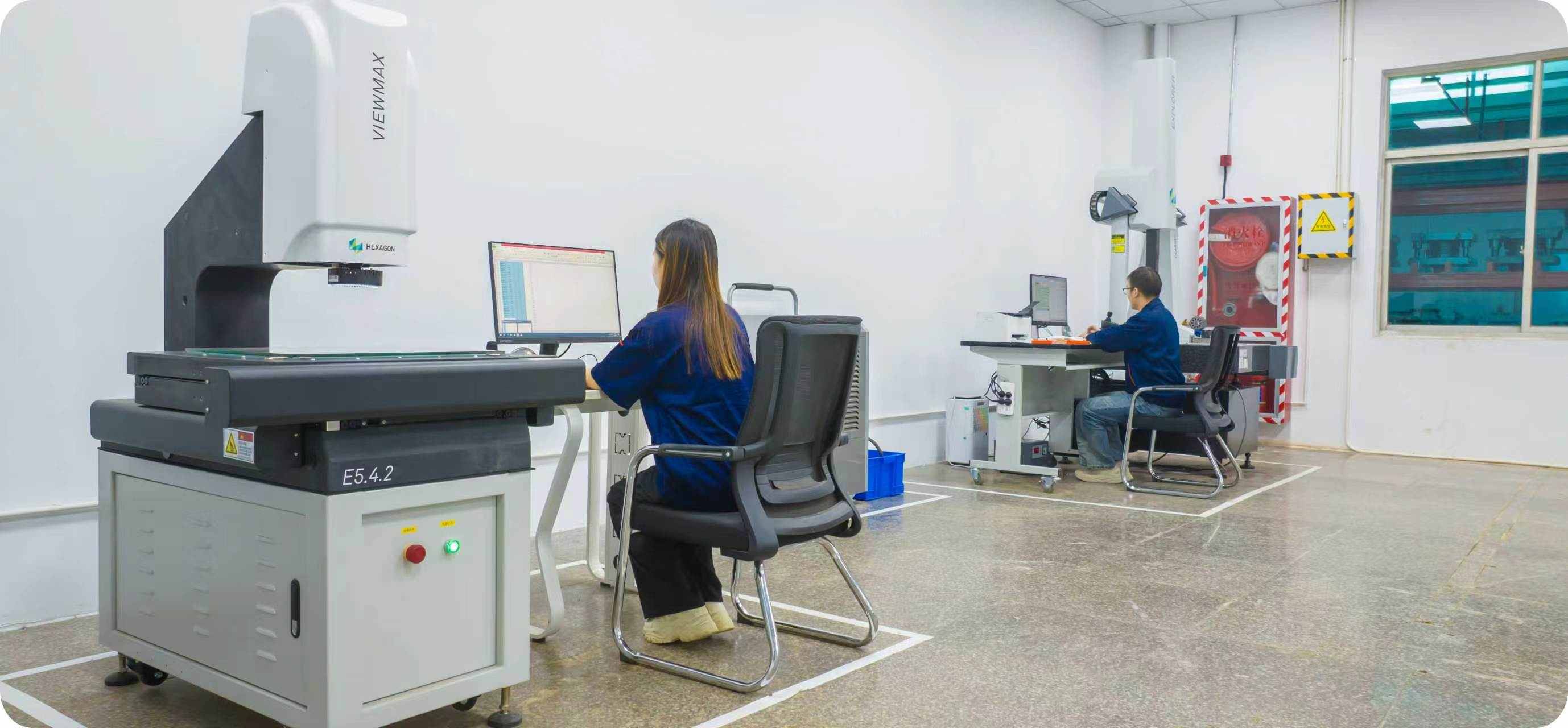
Electrical steel is the standard material for axial flux stator cores. The choice of grade and thickness is driven by the electrical frequency the motor runs at, the flux density in the teeth and yoke, and the acceptable level of core loss.
Non-oriented electrical steel (NGO / CRNGO) — the usual choice for axial flux stator cores. Its magnetic properties are similar in all directions in the plane of the strip, which suits the multi-directional flux paths found in a stator ring.
Grain-oriented electrical steel (GO / CRGO) — used where the flux path in a specific region of the design is well defined and higher permeability in that direction gives a measurable benefit.
Amorphous alloy — a niche option for designs targeting very low core loss at high frequency. Availability depends on the design and the required core geometry.
We work with electrical steel from 0.1 mm to 0.5 mm.
Thinner material reduces eddy current loss, which becomes significant as the operating frequency rises — the reason high-speed axial flux designs often specify thin-gauge strip. Thicker material is more economical where the frequency is lower and core loss is less critical.
Grade selection is normally made by the motor designer. If you would like a recommendation, send us the operating frequency, flux density and target core loss, and we will advise on the grade and thickness.
The insulation between layers of a wound core comes from the coating applied to the electrical steel strip. The coating type is fixed by the material supplier, so if your design has a specific insulation requirement, tell us at enquiry stage and we will confirm what is available with the grades we supply.
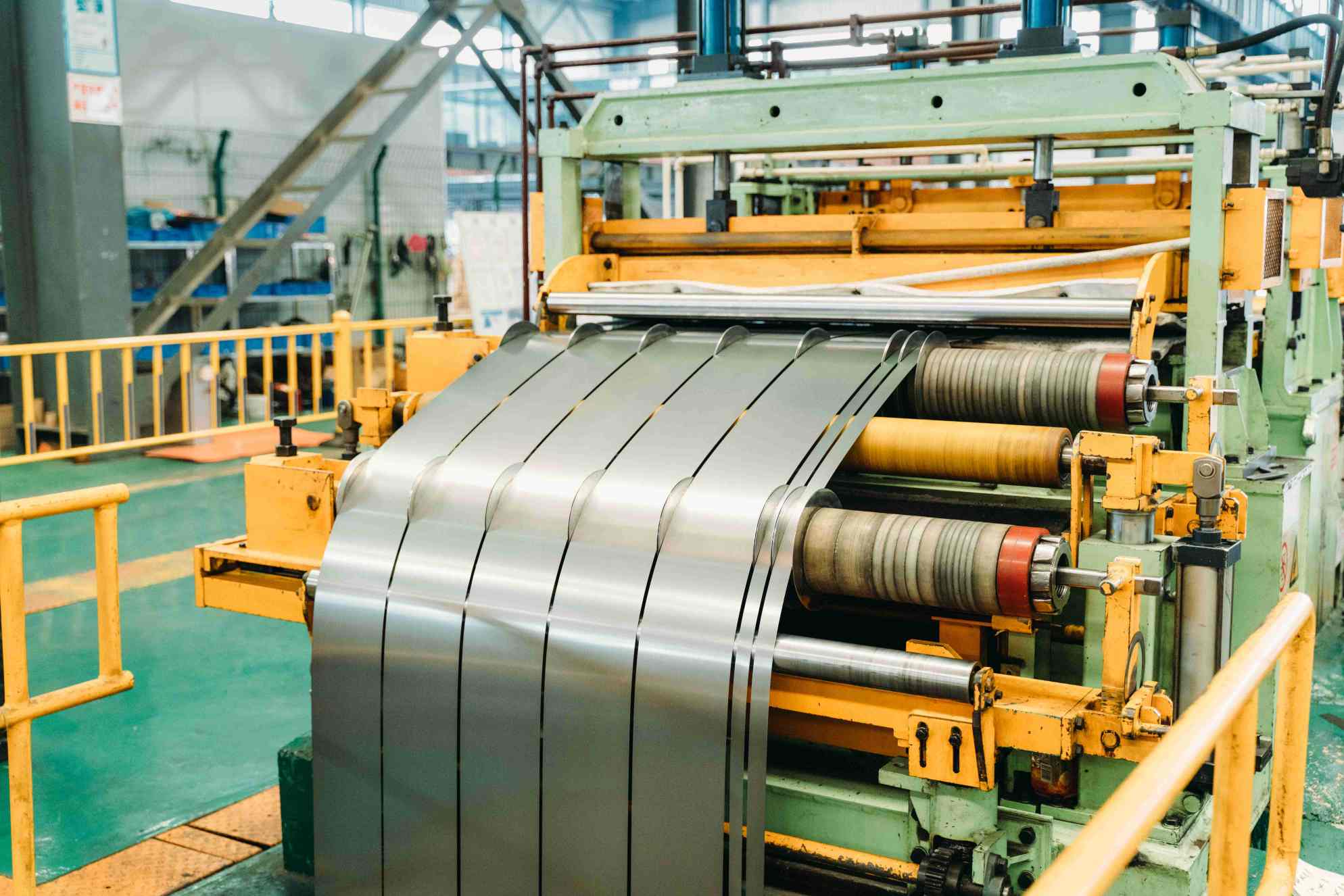
Specifications above are confirmed for each order at the drawing review stage. Please send your drawing for an exact quotation.
We do not sell standard axial flux stator cores from stock. Each core is manufactured against the customer's specification. To quote accurately, we need the following information:
Design files
Dimensions
Material
Commercial
Because the slot profile is produced by laser rather than by a die, a design change during development does not require new tooling. This makes it practical to iterate on a prototype before committing to volume production.
Axial flux motors have attracted serious attention in electric vehicles, eVTOL and robotics because of the way their magnetic flux travels. In an axial flux machine, flux crosses the air gap parallel to the shaft; the machine becomes a disc rather than a cylinder.
This geometry brings real advantages:
High torque density — the active surface area between stator and rotor is larger for a given frame size than in a radial flux machine.
Short axial length, lower weight — the motor is considerably flatter, which matters where installation space is tight.
Efficient use of active material — because the flux path is short and direct, less iron and copper is needed for the same output.
Effective heat dissipation — the flat stator has a large exposed surface area relative to its volume, which helps heat leave the winding.
Fits a wide range of machines — hub motors, traction motors, eVTOL propulsion units, robot joint actuators and high-speed industrial spindles.
The trade-off is on the manufacturing side. An axial flux stator core is harder to make than a cylindrical one: slot accuracy, roundness and flatness tolerances are tighter, and because the core is wound rather than stacked, the geometry is set by the winding and the cut quality rather than by a die. That is exactly the part of the problem we focus on.
Electric vehicles — traction motors and auxiliary drives where a compact, lightweight, high-torque machine is needed. Thin-gauge electrical steel helps control core loss at high electrical frequency.
eVTOL and drones — propulsion units where power-to-weight ratio decides payload and range, and where the flat form factor fits neatly into a wing or arm.
Robotics and humanoid robots — joint actuators that need high torque in a short axial envelope.
Industrial and high-speed motors — spindles, compressors and other machines that run at high electrical frequency and benefit from thin-gauge material.
Quality control on a wound axial flux stator core concentrates on what cannot be corrected after the core is formed:
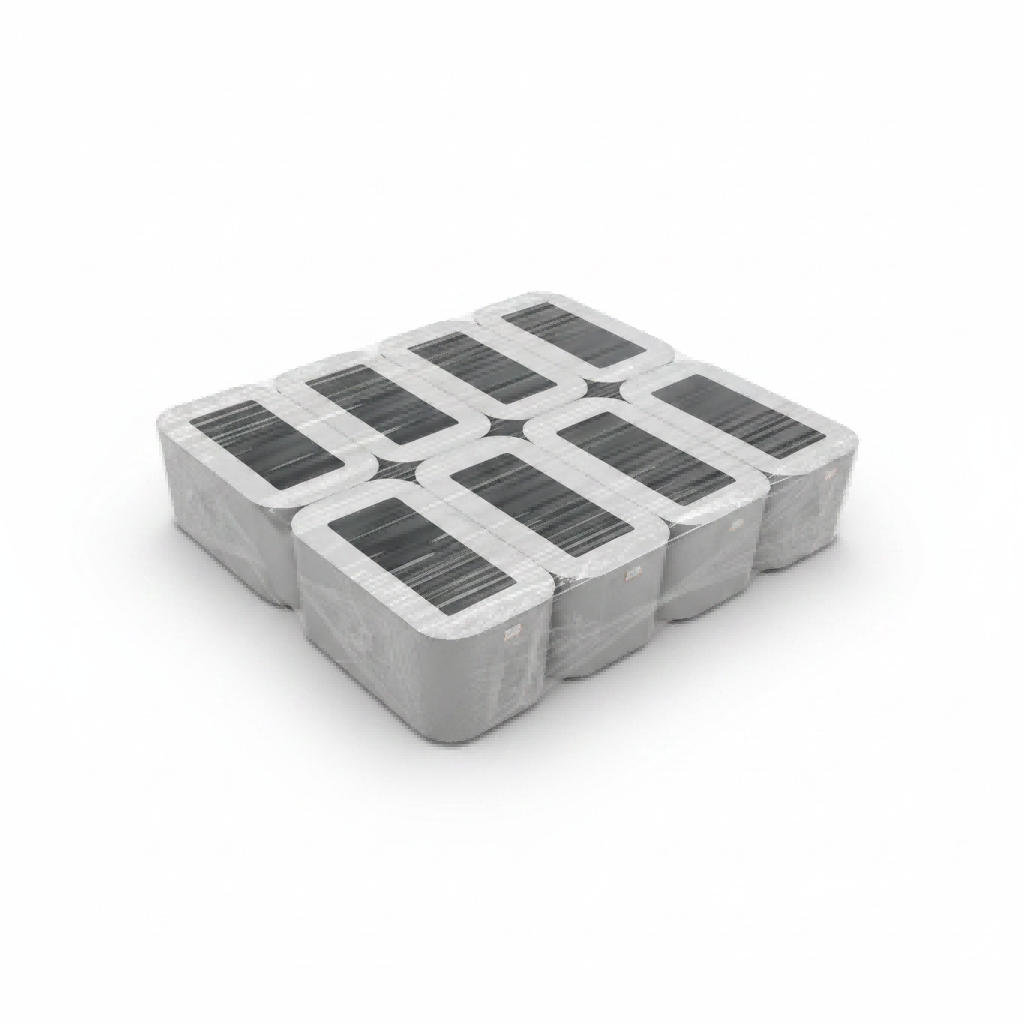
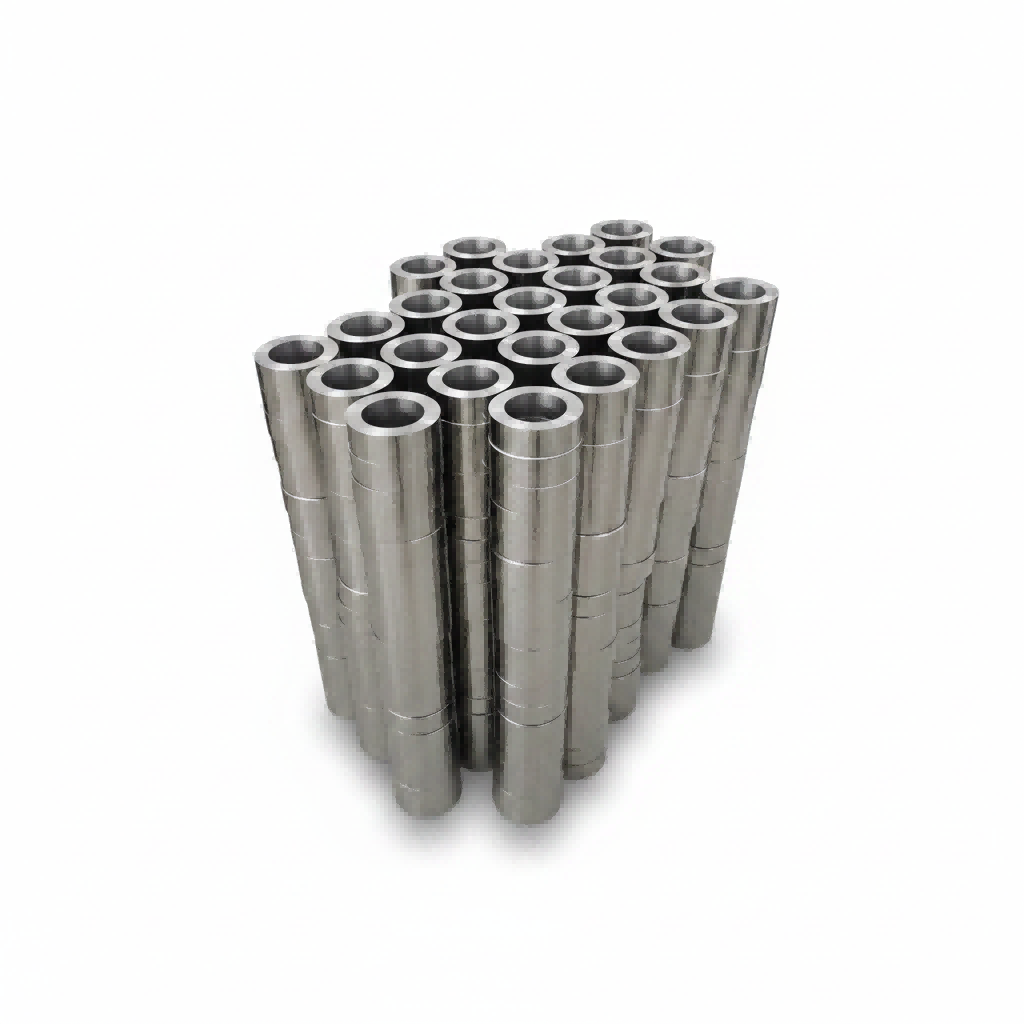
Cores are packed to protect three things: the steel surface against rust and moisture, the geometry against deformation in transit, and the slot edges against handling damage.
Standard export packing is used, and packing method can be adjusted to the customer's requirement for automated feeding lines.
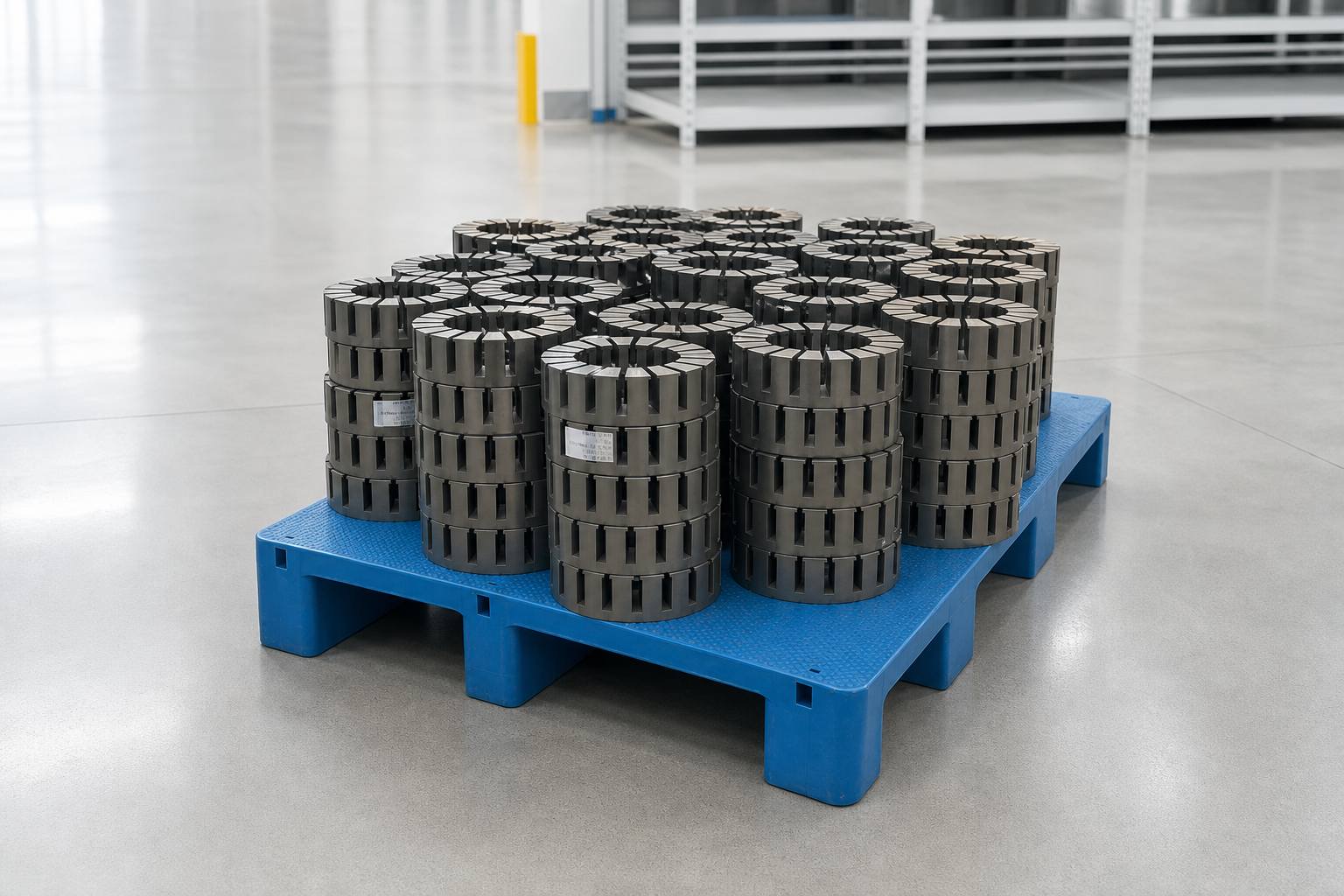
What is an axial flux stator core? An axial flux stator core is the stator of an electric motor in which the magnetic flux crosses the air gap parallel to the motor shaft. Because the flux path is axial, the core is a flat, disc-shaped ring rather than the cylindrical slotted stack used in a radial flux motor. The cores we manufacture are wound cores: electrical steel strip is wound into the ring, and the slot features are formed by laser.
How is an axial flux stator core different from a radial flux stator core? The difference is both magnetic and structural. In a radial flux motor the flux leaves the shaft radially and the stator surrounds the rotor as a cylinder; the stator is normally built as a stack of punched laminations. In an axial flux motor the flux runs parallel to the shaft, the stator and rotor face each other as discs, and the stator core is normally a wound ring rather than a stack.
Can you manufacture axial flux stator cores to our drawing? Yes. Custom manufacturing is our standard mode of operation — we do not supply axial flux stator cores from a fixed catalogue. Send us a slot drawing or 3D model and our engineering team will confirm feasibility and come back with a quotation.
What material thicknesses do you work with? We work with electrical steel from 0.1 mm to 0.5 mm. Thinner material reduces eddy current loss at higher operating frequency, which is why high-speed axial flux designs often specify thin-gauge strip.
What diameters and core heights can you produce? Diameters and core heights are customized to your design. The practical range depends on the strip width, the material thickness and the winding setup, so we confirm it at the drawing review stage rather than quoting a blanket range. Send your requirement and we will come back with a firm answer.
Do you need to make a stamping die for our design? No. Because the slot features are formed by laser, there is no die for the slot profile. That has two consequences: small quantities and prototypes are economical, and changing the slot geometry during development does not mean paying for new tooling.
What is the minimum order quantity? Because there is no die to amortise for your slot profile, the minimum quantity is driven by production batch size rather than tooling cost. Please contact us with your drawing and required quantity.
Do you supply the wound core only, or with the slots already cut? Yes, please tell us the state in which you need the core for your own assembly process, and we will confirm what we can supply.
Is an axial flux stator core a lamination stack? Not necessarily. Axial flux stator cores can be built in more than one way, and the cores we manufacture are wound cores — the strip is wound into the ring rather than stacked as separate punched laminations. Lamination stacks belong to the radial flux family of motor cores. If your design was specified as a lamination stack, send us the drawing and we will tell you whether it suits a wound core.
How do you control slot accuracy and core geometry? Slot position and size are set by the laser program and checked against the drawing. On the core itself, the parameters that matter are outer diameter roundness, flatness and core height, because winding tends to make the outer contour follow the slot pattern rather than a true circle. These are checked on the finished core before packing.
Is the motor efficiency of an axial flux motor higher than a radial flux motor? Not automatically. Whether an axial flux machine performs better depends on the design, the application and the manufacturing quality of its components. What we can say with confidence is that the stator core has an outsized influence on the result: slot accuracy, roundness, flatness and the condition of the cut edges all show up directly in core loss and in the motor's thermal behaviour.
What information do you need for a quotation? A slot drawing or 3D model, material grade and thickness (0.1–0.5 mm), slot number and type, outer and inner diameter, core height, dimensional tolerances and roundness/flatness requirements, quantity and any required surface treatment. If you do not have a finished drawing yet, send what you have and we will tell you what is missing.
How long does production take? Lead time depends on the current production schedule and the material required. We confirm the date in the quotation rather than quoting a standard lead time.
Send us your drawing, your material specification or even a rough sketch with dimensions — our engineering team will review it and come back with a quotation and a realistic production plan.
What to send: slot drawing or 3D model, material grade and thickness, slot number, outer and inner diameter, core height, quantity.
Custom axial flux stator cores wound from 0.1–0.5 mm electrical steel, with slot features formed by laser — no stamping die required. Send your drawing for a quote.
Custom axial flux stator cores wound from 0.1–0.5 mm electrical steel, with slot features formed by laser — no stamping die required. Send your drawing for a quote.
Custom axial flux stator cores wound from 0.1–0.5 mm electrical steel, with slot features formed by laser — no stamping die required. Send your drawing for a quote.
Custom axial flux stator cores wound from 0.1–0.5 mm electrical steel, with slot features formed by laser — no stamping die required. Send your drawing for a quote.
Custom axial flux stator cores wound from 0.1–0.5 mm electrical steel, with slot features formed by laser — no stamping die required. Send your drawing for a quote.
Custom axial flux stator cores wound from 0.1–0.5 mm electrical steel, with slot features formed by laser — no stamping die required. Send your drawing for a quote.
Custom axial flux stator cores wound from 0.1–0.5 mm electrical steel, with slot features formed by laser — no stamping die required. Send your drawing for a quote.
Custom axial flux stator cores wound from 0.1–0.5 mm electrical steel, with slot features formed by laser — no stamping die required. Send your drawing for a quote.
Custom axial flux stator cores wound from 0.1–0.5 mm electrical steel, with slot features formed by laser — no stamping die required. Send your drawing for a quote.

Adresse : Room 201, West Building A, Dawei Logistics, Xihai Industrial Zone, Lecong Town, Shunde District, Foshan City
Vous pouvez vous désabonner à tout moment. Pour cela, veuillez trouver nos coordonnées dans les mentions légales.


 IPv6 RÉSEAU PRIS EN CHARGE
We will contact you as soon as possible
Hi! Click one of our members below to chat on
 en
en fr
fr es
es