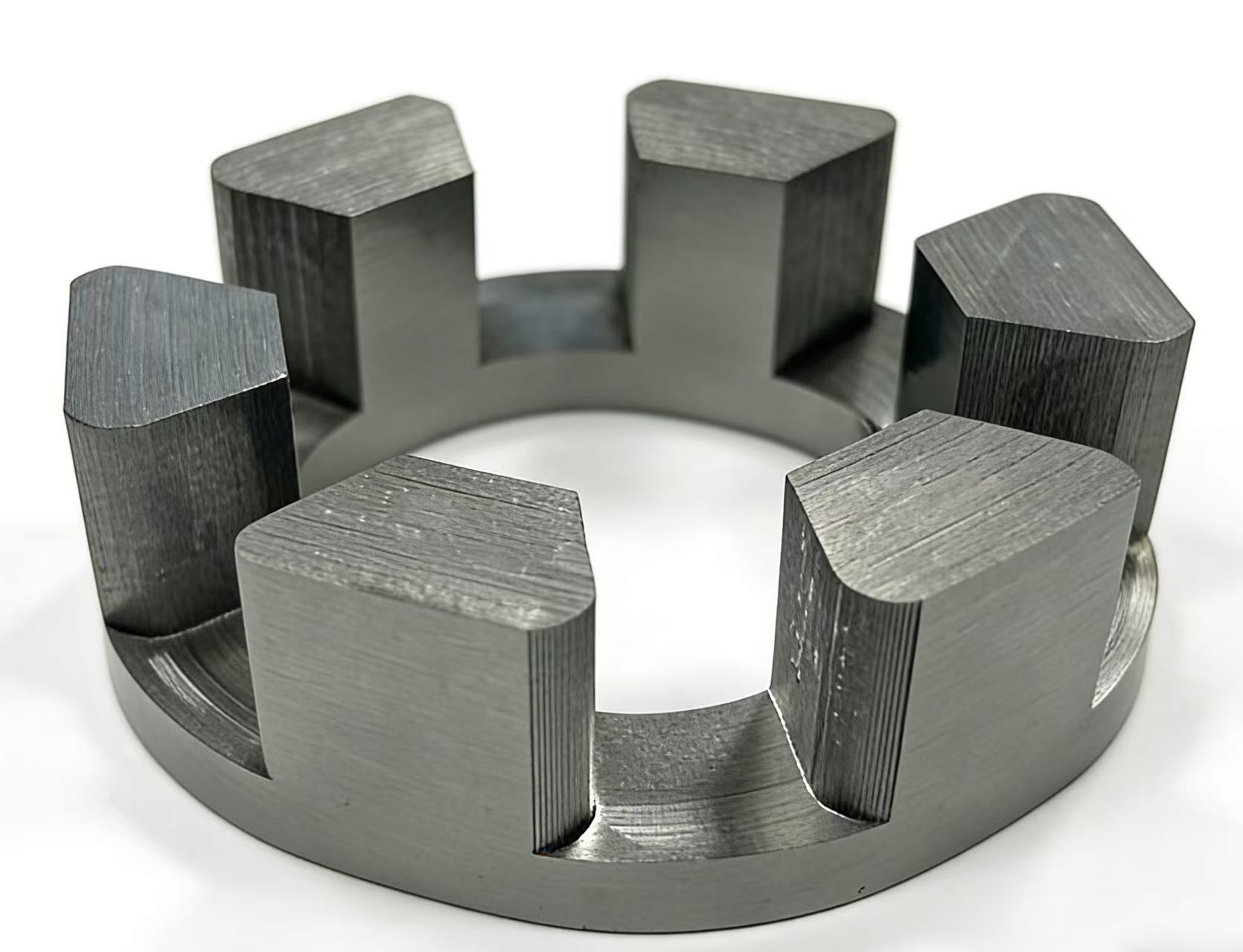
 Dans quelles situations utilise-t-on un noyau axial ?
Sep 09, 2026
L'application de noyaux axiaux Elle se concentre principalement sur les applications exigeant une extrême finesse, légèreté et une densité de couple élevée. Son essence réside dans un noyau de conversion électromagnétique plat, ce qui la rend particulièrement adaptée aux situations où il est nécessaire de « faire en sorte que » moteur « Plat, léger et puissant », le trouvera-t-on. Actuellement, les applications les plus abouties et les plus innovantes se concentrent principalement dans les domaines suivants :1. Véhicules à énergies nouvelles : moteurs intégrés aux roues et moteurs moteurs principauxIl s'agit actuellement du scénario d'application le plus suivi et le plus imaginatif. Moteurs intégrés à la roue : Le moteur est directement inséré dans la roue. La forme plate du noyau axial épouse parfaitement l’espace restreint à l’intérieur de la roue, et son couple élevé intrinsèque lui permet d’entraîner directement la roue, éliminant ainsi le besoin d’un réducteur et d’un différentiel. Mercedes-Benz, Ford, GM, BYD, Dongfeng et d’autres constructeurs automobiles ont développé des prototypes ou des projets de production en série de moteurs intégrés à la roue, le noyau axial étant l’élément central.Moteur principal hybride/100 % électrique : Certains modèles haut de gamme commencent à utiliser des moteurs à flux axial comme moteur auxiliaire sur l’essieu avant ou arrière. Grâce à sa longueur extrêmement réduite, il peut être facilement placé entre le moteur et la transmission, ou logé dans un interstice du châssis, sans empiéter sur l’espace précieux de l’habitacle. 2. Moteurs articulaires pour robots humanoïdesLes articulations des robots humanoïdes nécessitent une densité de puissance et de couple extrêmement élevée, tout en conservant une taille très compacte.Les moteurs radiaux traditionnels sont souvent trop longs, dépassant de l'articulation et affectant l'esthétique et la flexibilité.Les moteurs axiaux, de par leur forme aplatie, peuvent être parfaitement intégrés aux articulations des bras et des jambes des robots, à la manière d'un « module musculaire ». Nombreux sont ceux qui étudient ou utilisent déjà des moteurs axiaux à noyau de fer pour obtenir des mouvements plus naturels et une puissance explosive accrue. 3. Automatisation industrielle et machines-outils : broches à grande vitesse et servomoteursBroches à grande vitesse : Grâce à leurs circuits magnétiques courts et à leurs faibles pertes fer, les noyaux axiaux sont idéaux pour les broches rotatives à haute fréquence et à grande vitesse. Par exemple, les broches des perceuses et des graveuses de circuits imprimés peuvent atteindre des vitesses de plusieurs dizaines, voire centaines de milliers de tours par minute (tr/min). Les noyaux axiaux réduisent efficacement la production de chaleur et les pertes d’énergie.Servomoteurs : Dans les équipements automatisés nécessitant un démarrage-arrêt rapide et un positionnement précis (comme le septième axe d’un robot et les machines d’emballage), la faible inertie des moteurs axiaux permet des temps de réponse extrêmement rapides, ce qui les rend plus adaptés que les servomoteurs radiaux traditionnels. 4. Appareils électroménagers et électronique grand publicCompresseurs de climatiseurs : Certains climatiseurs japonais haut de gamme commencent à utiliser des moteurs à noyau axial dans leurs compresseurs Inverter. Leur structure plate permet un encombrement réduit, facilitant ainsi leur intégration dans les unités murales ou de plafond. Aspirateurs et sèche-cheveux : Si les moteurs à structure radiale sont la norme pour les moteurs numériques haute vitesse de certaines marques haut de gamme, les solutions axiales font l’objet de recherches. Les moteurs axiaux permettent de réduire la longueur totale des appareils, ce qui les rend plus ergonomiques, tout en conservant une puissance d’aspiration élevée. Drones/Voitures volantes (eVTOL) : Pour les aéronefs électriques à décollage et atterrissage vertical (eVTOL), chaque gramme compte. Les avantages liés à la forte densité de puissance et à la légèreté des moteurs à noyau axial sont ici pleinement exploités, et de nombreux projets eVTOL utilisent cette topologie pour leurs moteurs d’hélices.
LIRE LA SUITE

 en
en fr
fr es
es



 IPv6 RÉSEAU PRIS EN CHARGE